
Ham Radio Is More Interesting Once You Start Doing Things
Field Notes is where I document what I learn along the way—portable operating, antennas, gear, projects, activations and the ideas that need a little more room than a video description.

Fresh From the Logbook
The newest article from N1JUR Field Notes.
Where Do You Want to Go Next?
Field Notes is only part of the story. Dig deeper into getting on the air, taking radio outside, or figuring out which gear actually earns a place in the setup.
Getting Started
A practical path from wondering where to begin to actually getting on the air.
Start Here →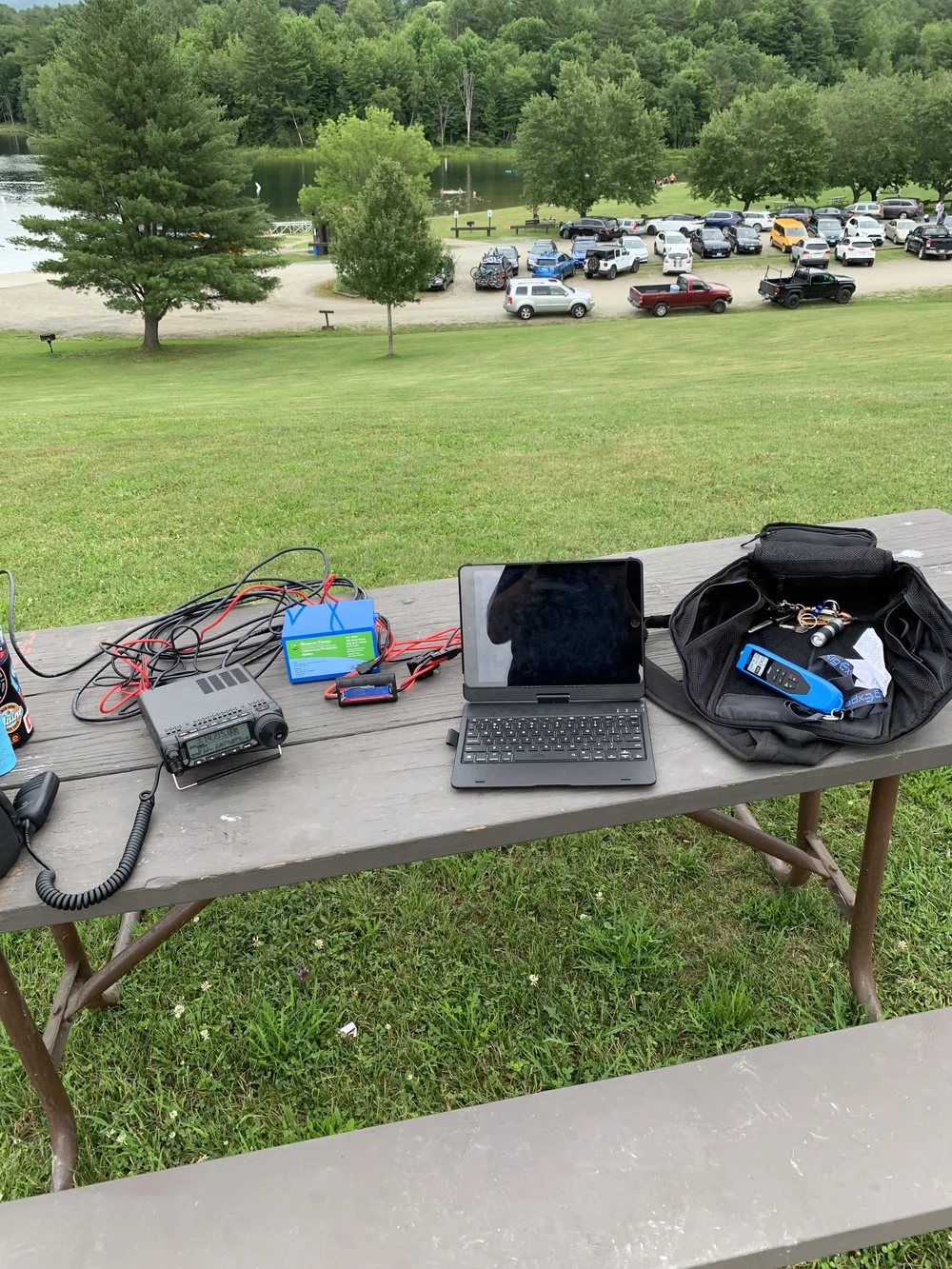
Activations
POTA, SOTA, Tiles and the lessons that come from actually operating away from the shack.
Explore Activations →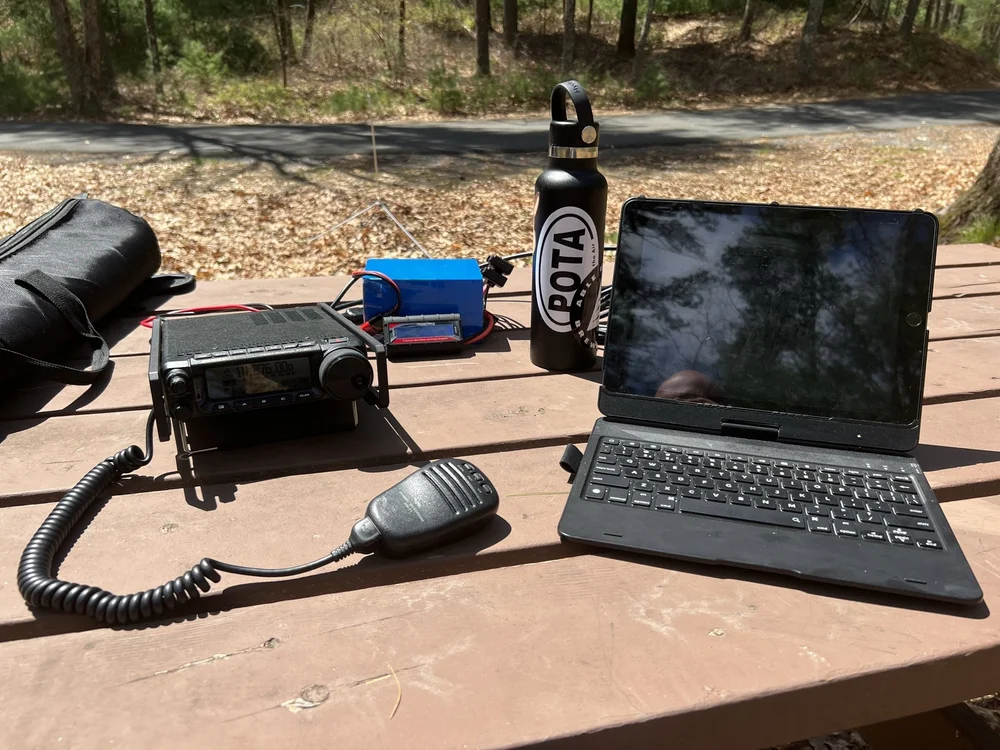
Gear
The radios, antennas and setups I use, test and keep bringing back into the field.
Explore Gear →
Dig Into the Field Notes
Browse the complete collection of articles, projects, experiments, lessons and occasional RF rabbit holes.
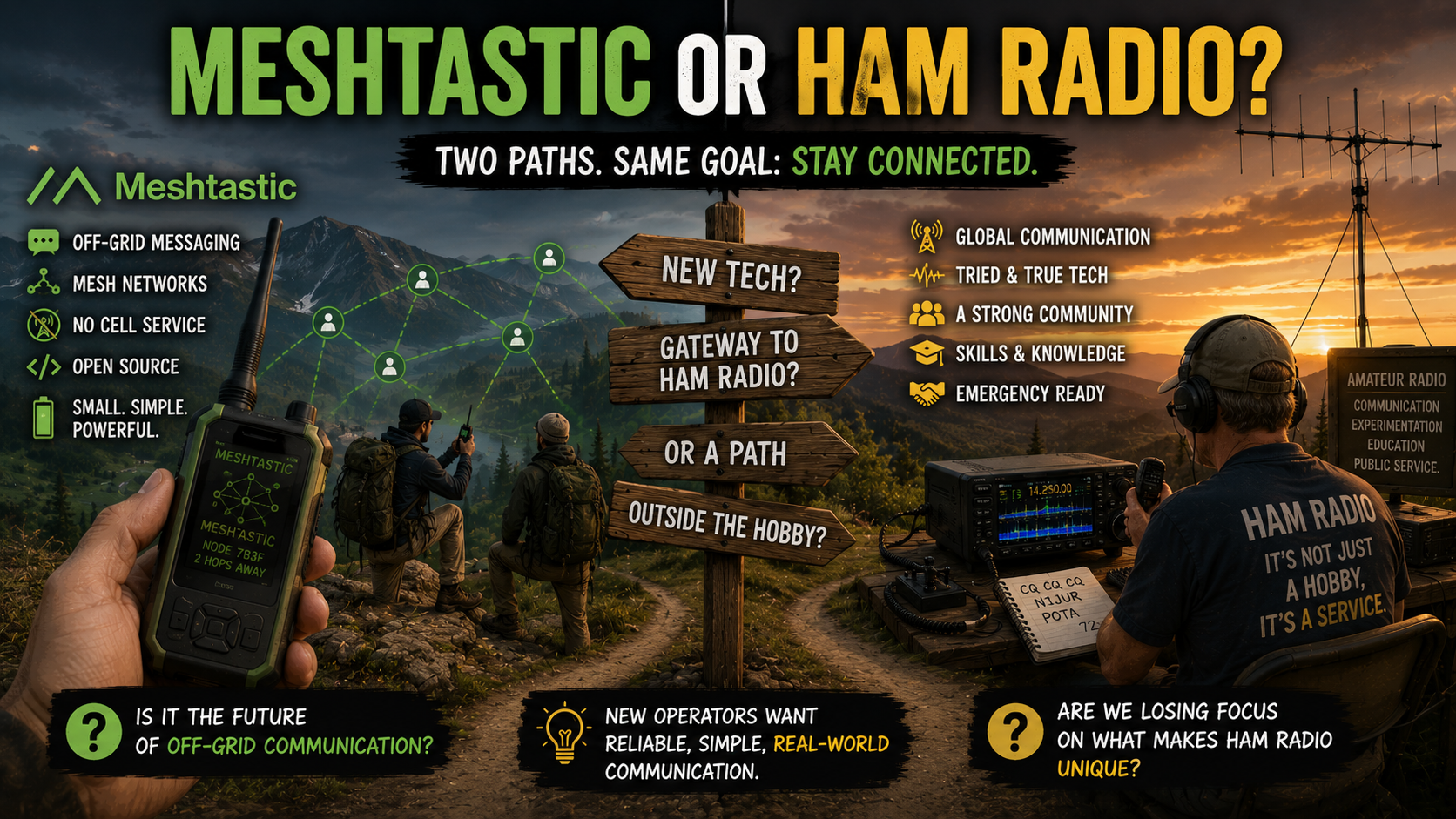
Meshtastic vs. Ham Radio: Are We Ignoring What New Operators Actually Want?
Meshtastic and MeshCore are everywhere right now.
Small radios. Off-grid messaging. Mesh networks. No cell service.
And I'll admit it… the technology is pretty cool.
But I've started wondering why so many hams are jumping into it.
Are we trying to turn Meshtastic into another ham radio mode? Are we using it as a gateway to bring new operators into the hobby?
Or are we slowly branching further outside amateur radio because we're more interested in "off-grid communications" than actually playing radio?
I think Meshtastic is showing us something important about what new operators want.
The question is whether amateur radio is paying attention.
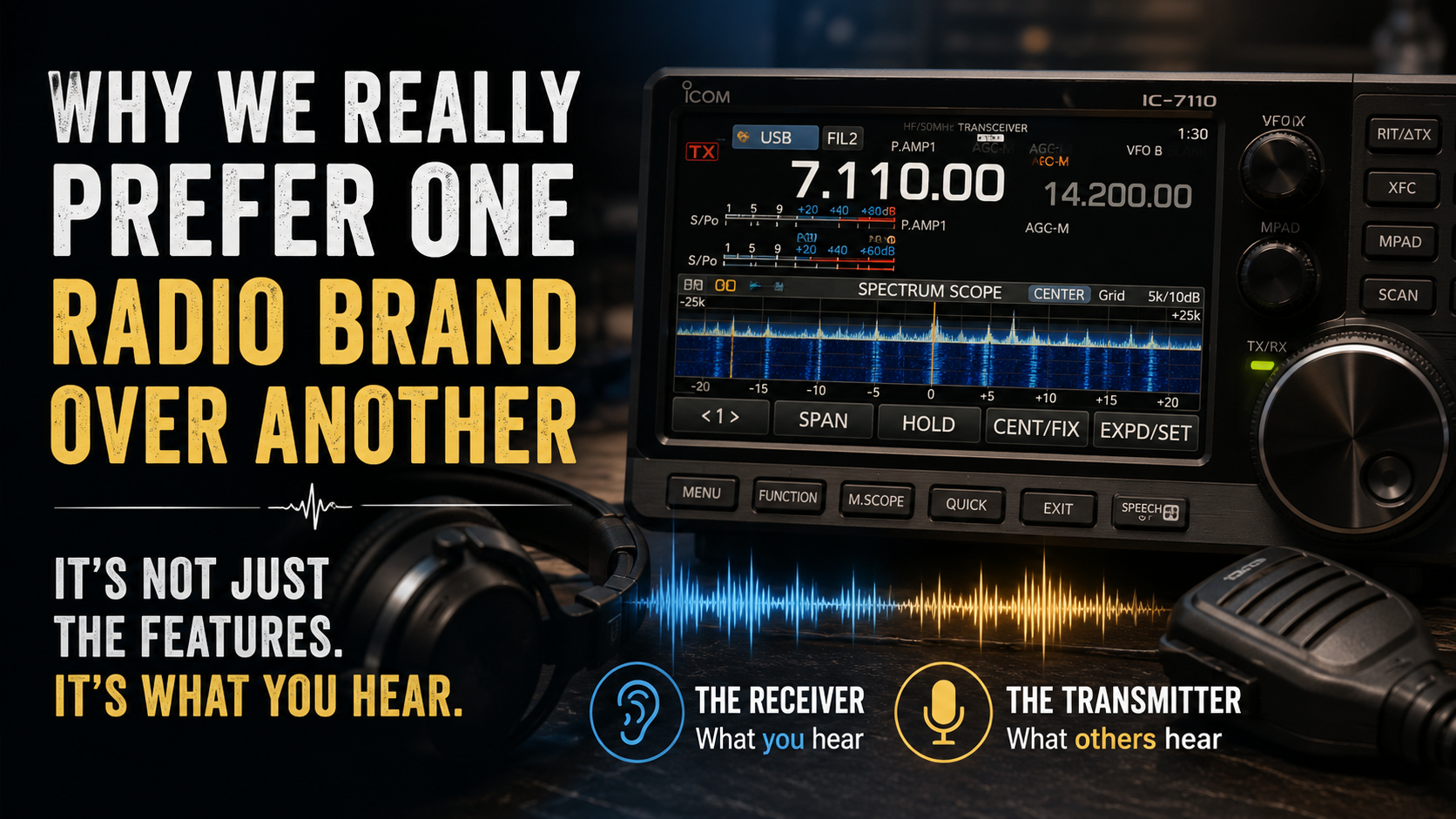
The IC-7110 ASKS: Why Do We Really Prefer One Radio Brand Over Another?
The new Icom IC-7110 has plenty of modern features. But is that really why we prefer one radio brand over another? Maybe it comes down to something much simpler

I Volunteered to Give Kids Ham Radio. They Gave Me Back Something Bigger.
I went into Ham Camp hoping to introduce kids to amateur radio. I came out of it more excited about the hobby myself. Sometimes giving back is the best way to remember why we got into ham radio in the first place.
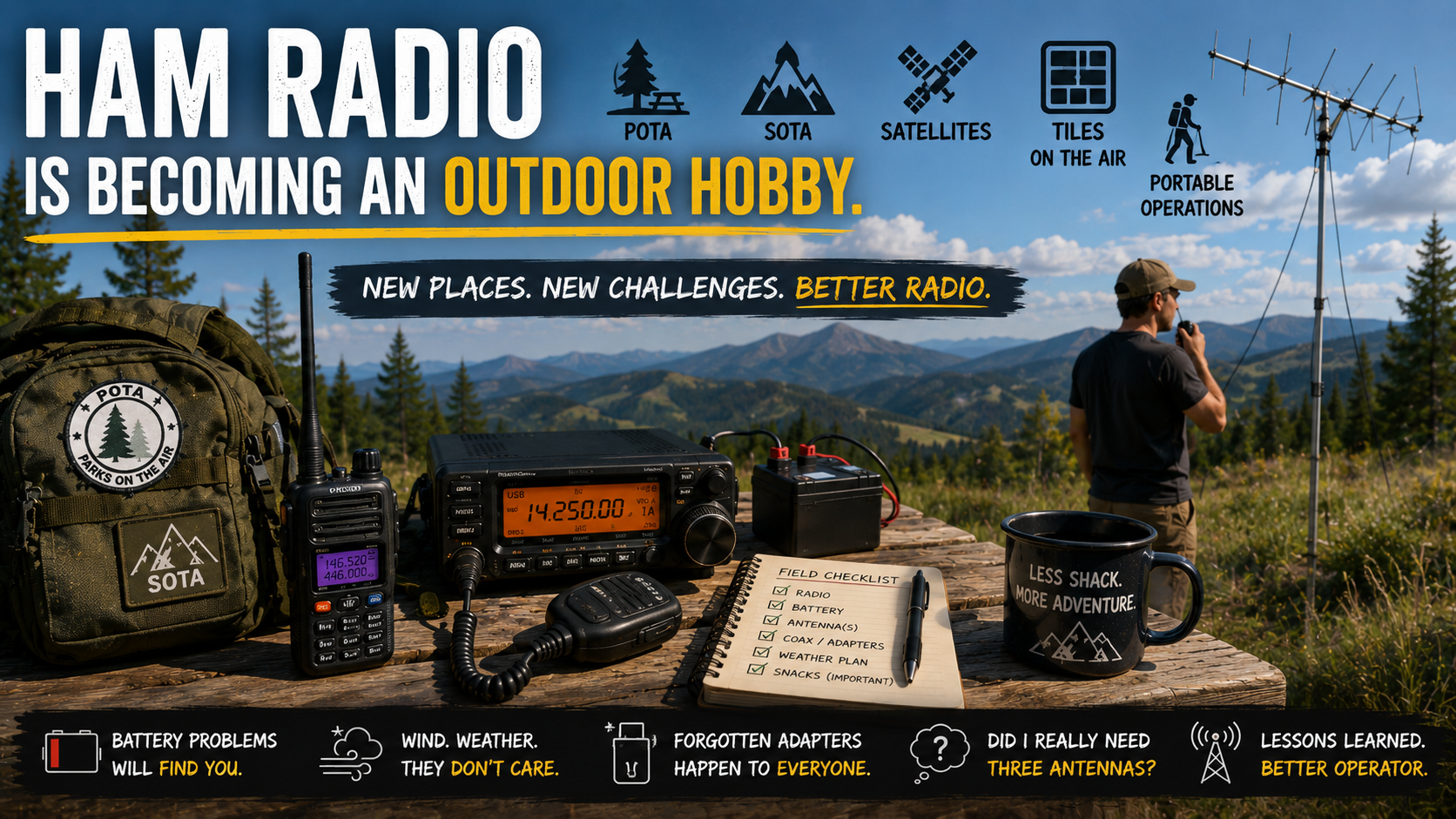
Ham Radio Is Becoming an Outdoor Hobby — and That’s a Good Thing
Think about what amateur radio looks like today.
Radios on picnic tables.
Antennas hanging from trees.
Backpacks on mountains.
People standing in fields pointing Yagis at satellites.
POTA, SOTA, satellites, Tiles on the Air, and portable operating are changing where we play radio.
And I think that's a very good thing.
But operating outside also teaches you some lessons the shack never will. Battery problems, forgotten adapters, wind, weather, and the realization that maybe you didn't need to pack three antennas for a 30-minute activation.
In the latest Field Notes, I'm looking at why ham radio is moving outdoors—and a few things I've learned from taking my station into the field.
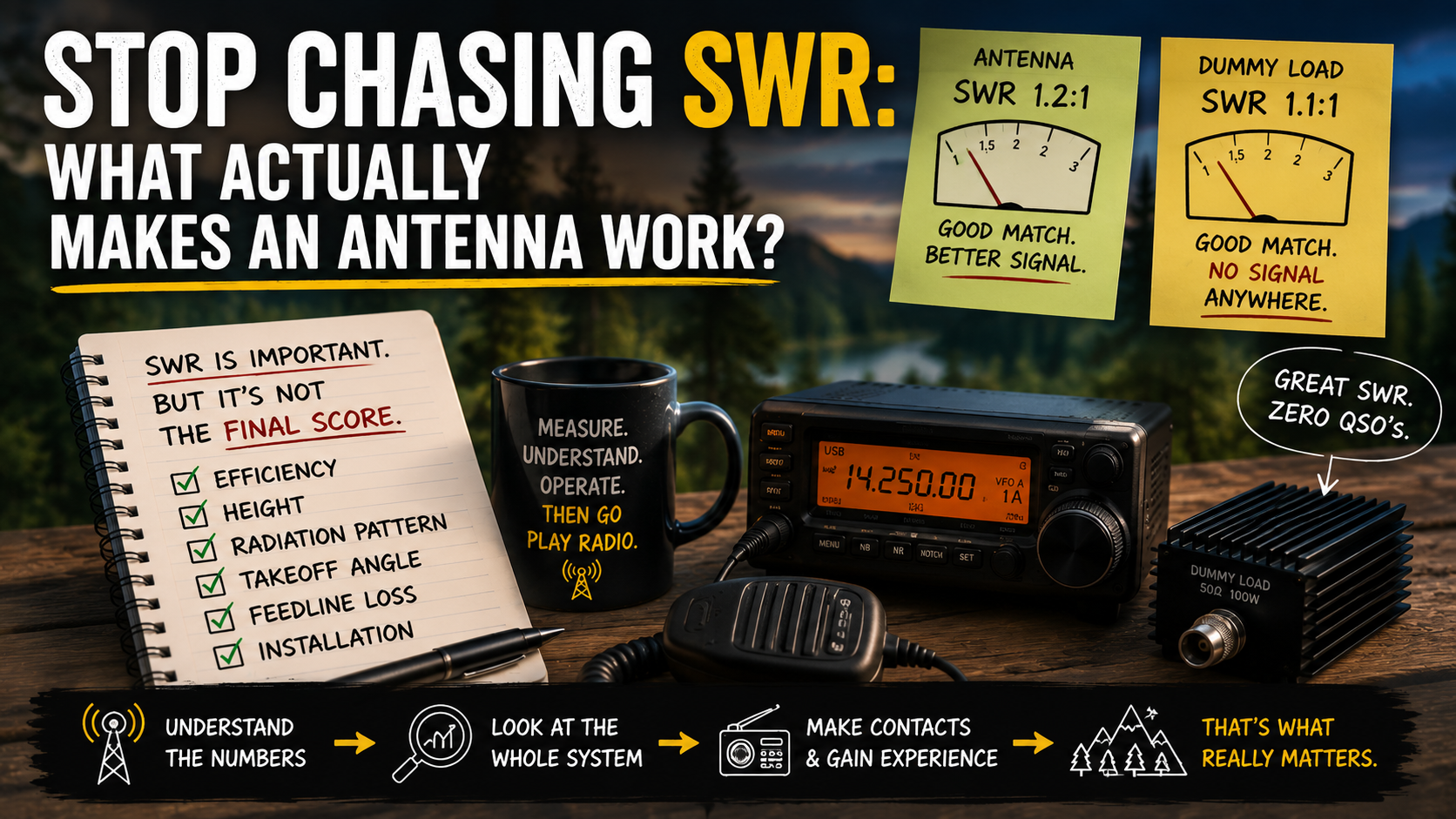
Stop Chasing SWR: What Actually Makes an Antenna Work?
We need to talk about SWR.
Again.
After spending three Brew & Activate episodes going down the antenna rabbit hole, I keep coming back to the same problem.
Hams are obsessed with getting an antenna to 1:1.
But a dummy load has great SWR too.
So what actually makes an antenna work?
Efficiency. Height. Radiation pattern. Takeoff angle. Feedline loss. Installation.
And yes… SWR still matters.
It just isn't the final score.
In the latest Field Notes, I'm tying together our Brew & Activate antenna series and looking at why it might be time to stop chasing the perfect SWR number.
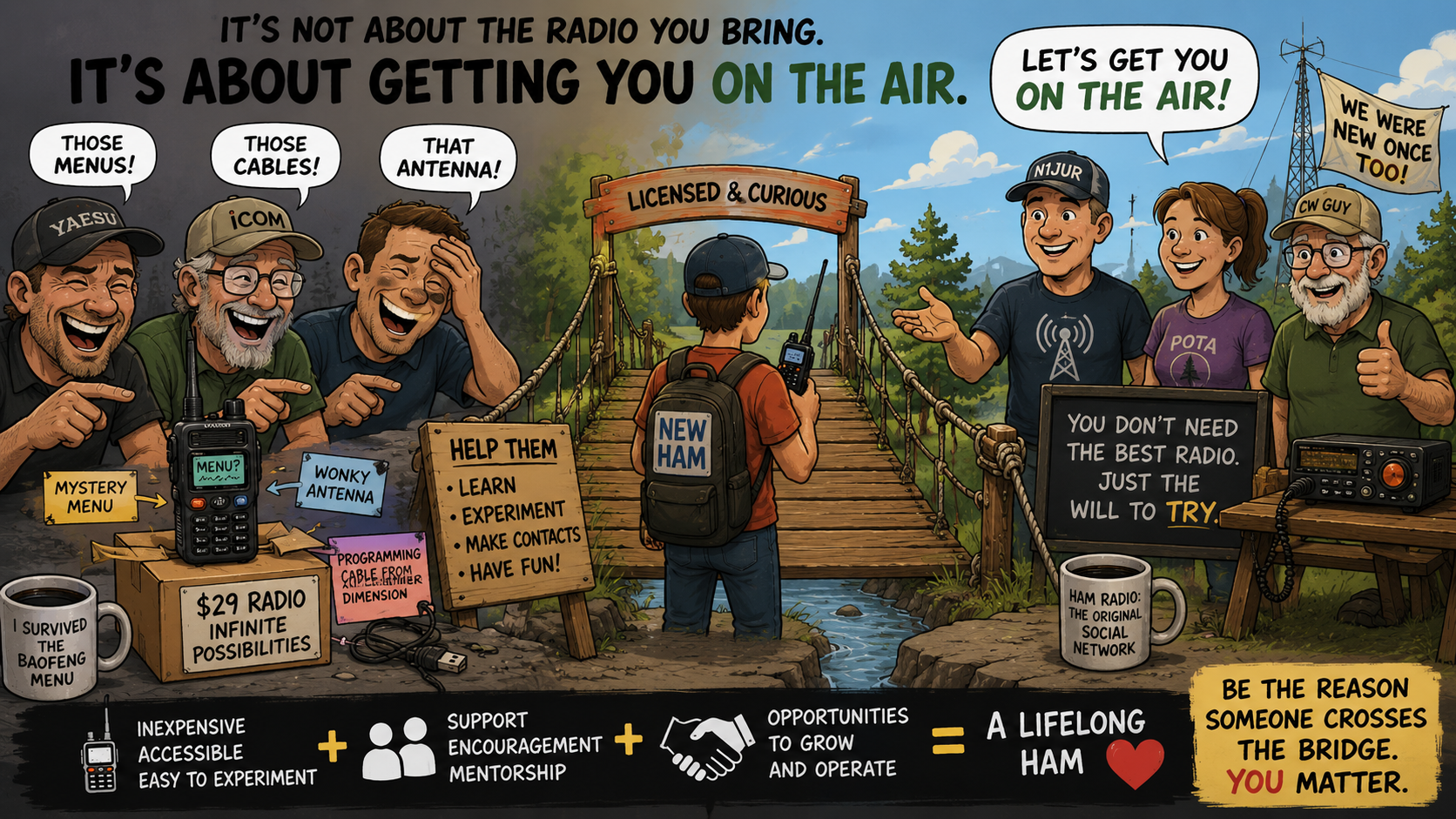
Are Cheap Chinese Radios Good for Ham Radio?
Almost every ham has one.
A Baofeng, Quansheng, Tidradio, Radioddity, or some other small handheld that cost less than the accessories attached to it.
We make fun of the menus.

The New Technician Question Pool: Are We Teaching the Right Things?
The new Technician question pool is now in use. New questions were added. Old ones were removed. Plenty were rewritten. But changing the test raises a larger question:
Are we giving new operators the foundation they need to actually grow in the hobby?

OLIGHT Oclip Pro Review: Does This Tiny Light Belong in a POTA Bag?
The OLIGHT Oclip Pro combines a floodlight, spotlight, red light, magnetic mount, and clip in one compact package. I tested it around the shack and beside an active receiver to see whether it deserved a permanent place in my POTA bag.
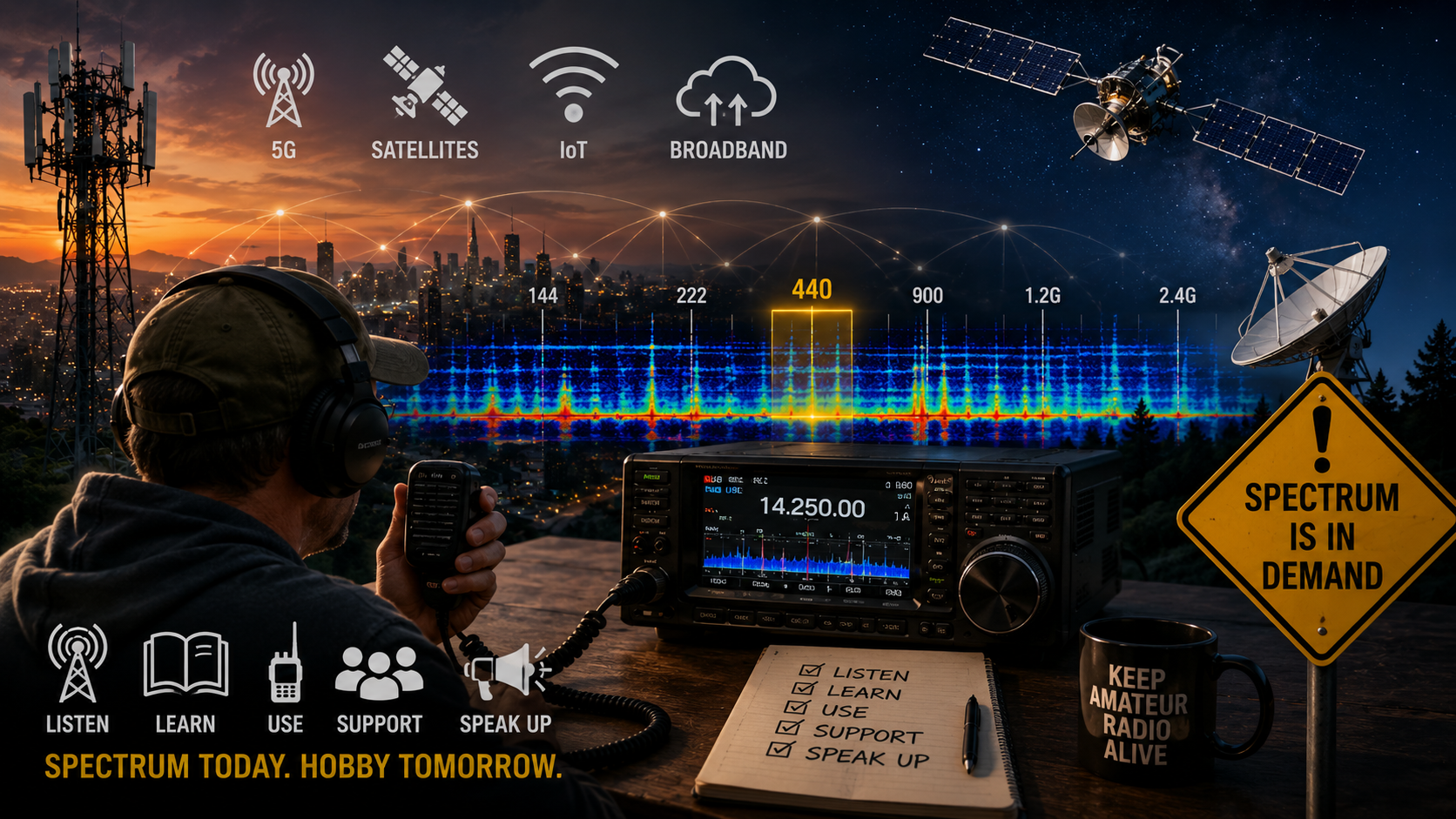
Are Amateur Radio Bands Under Pressure?
Our amateur radio bands have value. Commercial communications are growing. Satellite systems are growing. Wireless technology keeps expanding. And everyone needs spectrum. Does that mean someone is taking away 20 meters tomorrow?
What's one piece of equipment you thought you needed for portable operating but eventually stopped carrying? Or what's one simple upgrade that genuinely made your activations better?.