
Are We Making Portable Ham Radio Too Complicated?
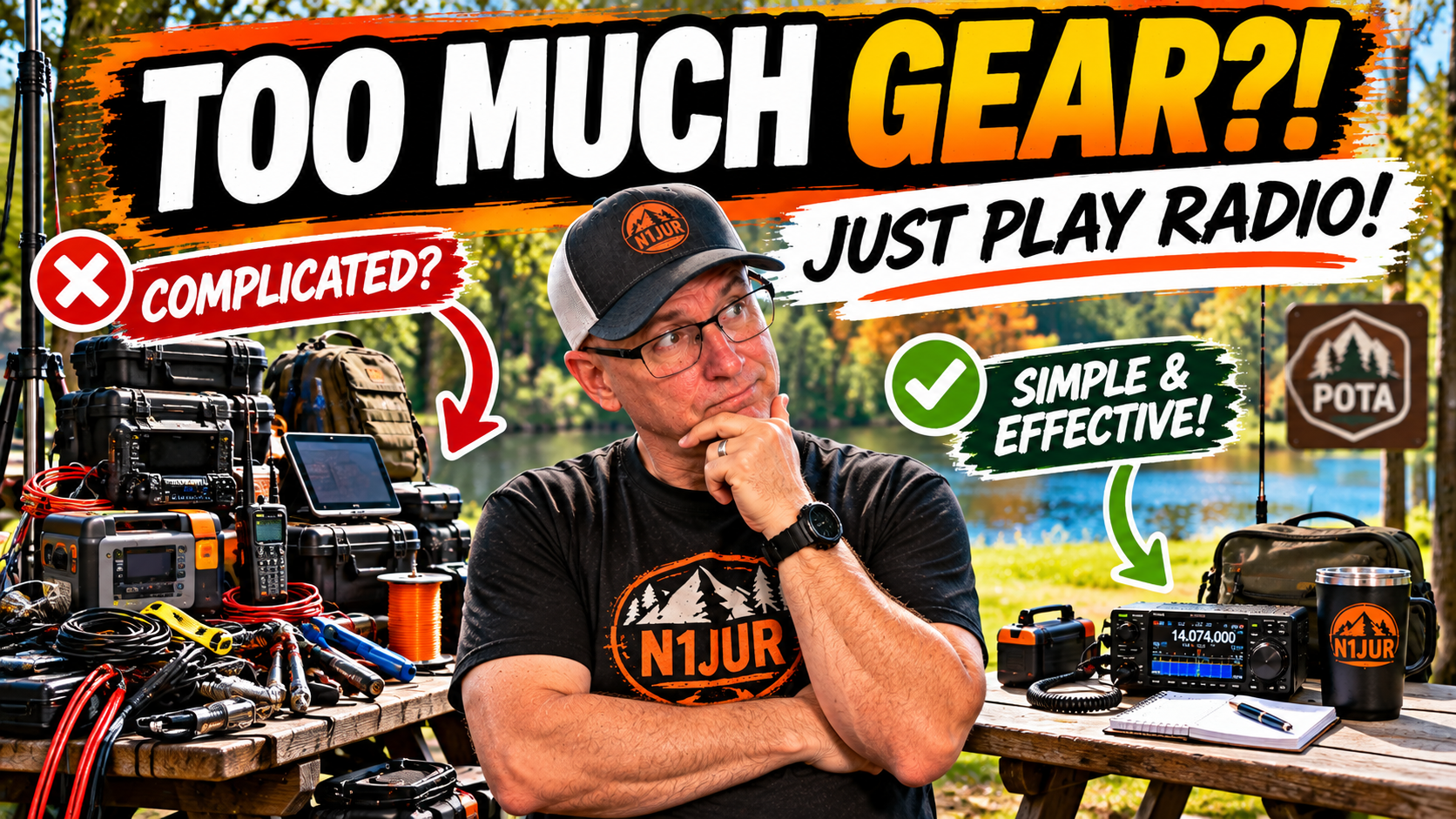
Somewhere along the way, portable ham radio got complicated.
What used to be a radio, an antenna, and a battery has turned into an entire discussion about equipment choices.
Which radio is best? How much power do you need? Is that antenna efficient enough? Should you use a laptop, tablet, or phone for logging? And don't even get me started on batteries.
Ask five POTA operators how to build a portable station, and you'll probably get seven different answers.
And at least three of them will tell you that you bought the wrong antenna.
But here's something I've been thinking about.
Are we spending more time trying to build the perfect portable station than actually using one?
The Perfect POTA Setup Doesn't Exist
Spend enough time watching YouTube videos, reading forums, or talking with other operators, and you'll discover there's always something better.
A lighter radio. A more efficient antenna. A battery that lasts longer. A logging app with another feature.
And there's nothing wrong with any of that.
Experimenting with equipment is part of what makes amateur radio interesting.
But sometimes we confuse improving our stations with needing those improvements before we can operate.
One operator is perfectly happy running five watts with a wire antenna.
Another wants a hundred watts, a full-size vertical, and enough battery capacity to operate all weekend.
Both can enjoy portable radio.
The difference is what they're trying to accomplish.
Your station doesn't have to be someone else's idea of perfect. It just has to work for you.
Start With What You Already Have
If you're interested in trying POTA, you probably don't need to buy an entirely new station.
Maybe you already have an HF radio that can operate from a suitable portable power source.
Maybe you've got an antenna that can be deployed safely at a park.
Maybe your first logging system is a notebook and a pencil.
That's a perfectly reasonable place to start.
You don't need a custom case with perfectly arranged compartments or a dozen accessories you haven't figured out how to use.
You need a working station, permission to operate where you're setting up, and a little time.
Will your first activation teach you something about your equipment?
Absolutely.
That's the point.
You might discover your antenna takes too long to deploy.
Maybe the battery is heavier than you expected.
Maybe you forgot an adapter.
Those are real problems worth solving.
And they're much more useful than trying to predict every possible inconvenience before leaving the house.
Stop Solving Problems You Haven't Had Yet
This is where I think a lot of us get distracted.
Someone posts a video about a new antenna system.
Another operator explains why your battery chemistry isn't ideal.
Someone else has a logging workflow that automatically does seventeen things you didn't know needed doing.
Suddenly, you're reconsidering equipment that was working perfectly well yesterday.
Before changing anything, ask yourself three questions:
What problem am I actually trying to solve?
Does this person's operating situation match mine?
How can I test whether the change makes a difference?
If you're struggling to make contacts, maybe an antenna change is worth investigating.
If your station takes forty minutes to assemble, perhaps simplifying the setup would help.
But if you're making contacts, enjoying yourself, and getting home without needing a chiropractor, maybe your current setup is doing its job.
Not every improvement someone recommends is an improvement you need.
Keep the Conversation Going
What’s one thing you stopped bringing to activations because you realized you never actually needed it? Drop into the Discord and tell the Brew Crew.
Join the N1JUR DiscordSimple Doesn't Mean Less Capable
There's a difference between keeping a station simple and cutting corners.
You still need to think about safety, proper power connections, antenna placement, and the equipment necessary for reliable operation.
But once those basics are covered, more equipment doesn't automatically mean a better activation.
Sometimes a simpler station means you can get on the air faster.
You spend less time unpacking, connecting cables, troubleshooting, and wondering where you put that one adapter.
And more time doing what you came to the park to do.
Play radio.
That's not an argument against experimenting or building elaborate portable stations.
If designing the ultimate portable setup is what you enjoy, have at it.
Just don't let that become the minimum standard you think everyone else needs to meet.
Like What’s Happening Here?
N1JUR is built around helping more people get active in ham radio through videos, Field Notes, POTA content, live streams, gear reviews, and community.
If you already watch the channel and want to support more of the work behind it, memberships are one way to help keep the signal going.
Videos. Field Notes. Live Streams. Community.
Membership support helps keep the N1JUR ecosystem moving without turning every page into a pledge drive wearing a callsign hat.
Learn About the Community →The Best Setup Is the One You Actually Use
Here's my challenge for your next activation.
Take the equipment you already know works.
Leave behind one accessory you rarely use, provided it isn't essential for safety or operation.
Set up your station and pay attention to what actually happens.
What worked?
What slowed you down?
What did you genuinely wish you had brought?
Then make one improvement based on that experience.
You might discover you need a better antenna.
Or a different battery.
Or absolutely nothing.
Because the goal isn't to build the most impressive portable station in the parking lot.
It's to build a station that makes you want to go back to the park and operate again.
And sometimes the best upgrade is simply getting outside and turning the radio on.