
Getting Started in Ham Radio Without Melting Your Brain
Ham radio can look intimidating from the outside. Licenses, antennas, radios, repeaters, call signs, bands, coax, power supplies, and that one guy who says you need to learn everything before you press the button.
Good news: you do not need to know everything to get started. You need a path, a little curiosity, and a way to get on the air without buying half the internet first.
It’s Not Just Old Guys Talking Into Boxes
Amateur radio is a hands-on communication hobby where licensed operators use radios to talk locally, across the country, around the world, through satellites, from parks, from vehicles, during events, and sometimes from places where cell service has already thrown in the towel.
It can be technical, social, practical, experimental, emergency-focused, outdoorsy, digital, old-school, or all of those things in the same weekend.
Repeaters & Simplex
Talk across town, join local nets, connect with nearby operators, and learn basic radio etiquette.
HF, Digital & Portable
Work stations across the country, try digital modes, activate parks, experiment with antennas, and discover how deep this rabbit hole goes.
The Simple Path From Curious to On the Air
Don’t try to learn every radio mode, band plan, antenna type, and connector in one sitting. Start with the path that gets you licensed, listening, and making contacts.
Learn What the License Does
Your license gives you permission to transmit on amateur radio frequencies. Start by understanding what your entry-level license allows in your country or region.
Listen Before You Transmit
Listen to local repeaters, nets, simplex traffic, and online examples. You’ll learn a lot just by hearing how operators actually talk.
Get a Simple First Radio
A basic handheld radio can be enough to learn local communications. You do not need to buy half the internet before your first QSO.
Make the First Contact
Key up, identify with your callsign, keep it simple, and ask for a radio check or join a friendly local net. The first one is the awkward one. That’s normal.
Start Simple. Upgrade Later. Avoid the Gear Avalanche.
The fastest way to get overwhelmed is to think you need the perfect shack before making your first contact. You don’t. Start with the basics and let your interests guide the upgrades.
A Simple First Radio
A handheld radio is often enough to start learning local repeaters, nets, and basic operating.
Better Than Stock
The antenna usually matters more than new operators expect. Even a modest upgrade can help.
Local Repeaters
Find your local repeaters, learn the tones, and know where operators are actually active.
A Club or Community
A helpful ham community will save you from hours of avoidable confusion and cable-related sadness.
Things That Trip Up New Hams
Everyone starts somewhere, and everyone makes mistakes. The goal is not to avoid every awkward moment. The goal is to keep those awkward moments from turning into “I guess this hobby is not for me.”
- Buying too much gear before knowing what you want to do
- Thinking a handheld radio should magically work everywhere
- Ignoring the antenna and blaming the radio
- Being afraid to key up because you might sound new
- Trying to learn every mode and band at once
- Not joining a local club or online community
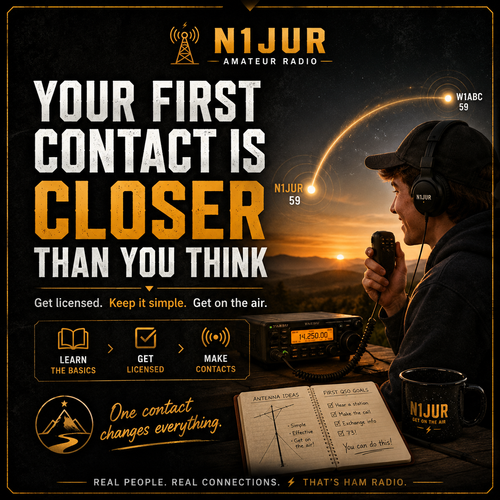
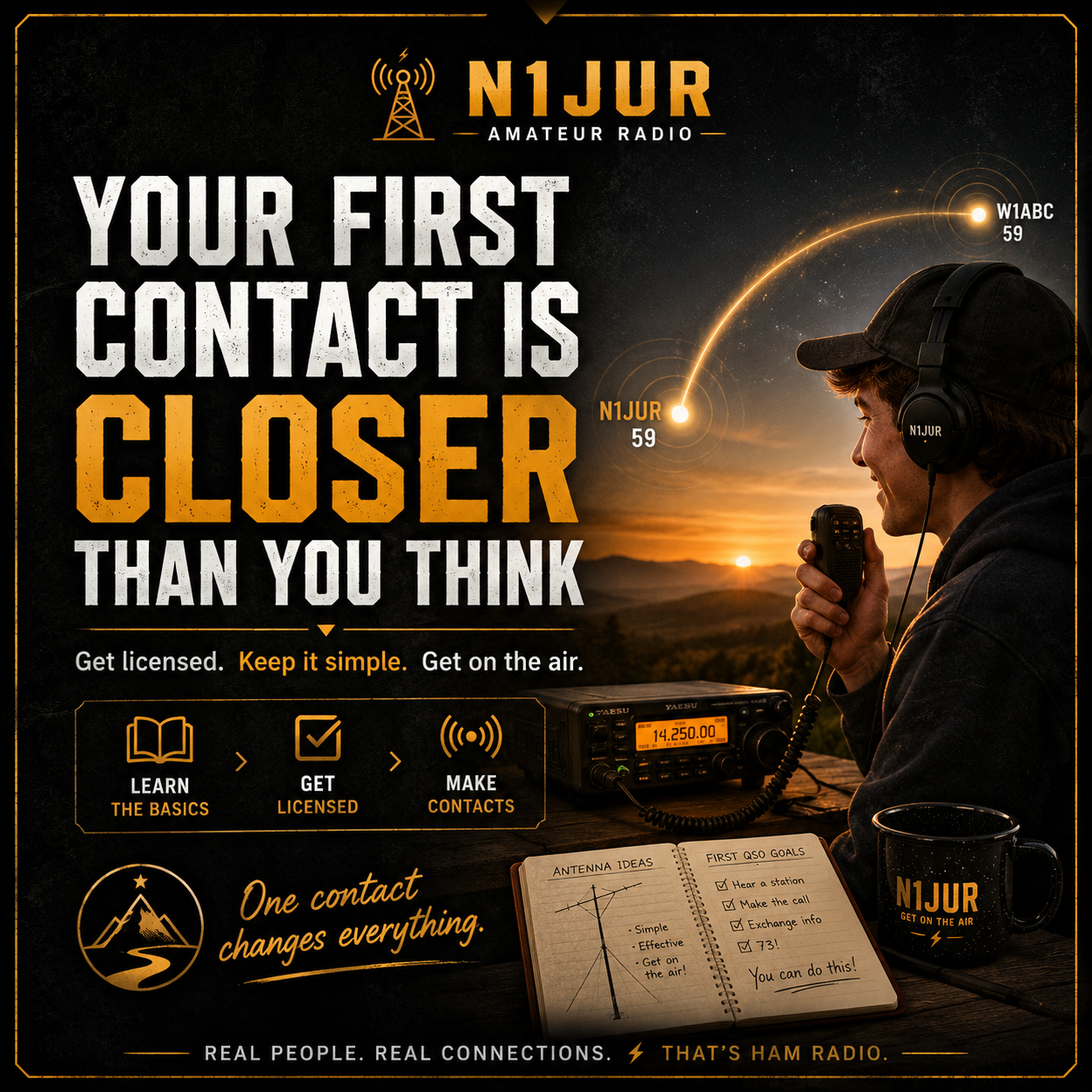
Your First Contact Is Closer Than You Think
Getting started in ham radio can feel intimidating, but it gets easier once you have a few simple steps, a little encouragement, and people who remember what it was like to be new.
Learn the basics, listen a little, ask questions, and get on the air. The hobby starts making a lot more sense once RF actually leaves the antenna.
Watch These Before You Buy the Entire Internet
A beginner-friendly set of videos to help you understand the hobby, get on the air, and avoid turning your first setup into a drawer full of regret.