
Does Ham Radio Need Its Own Operating System?
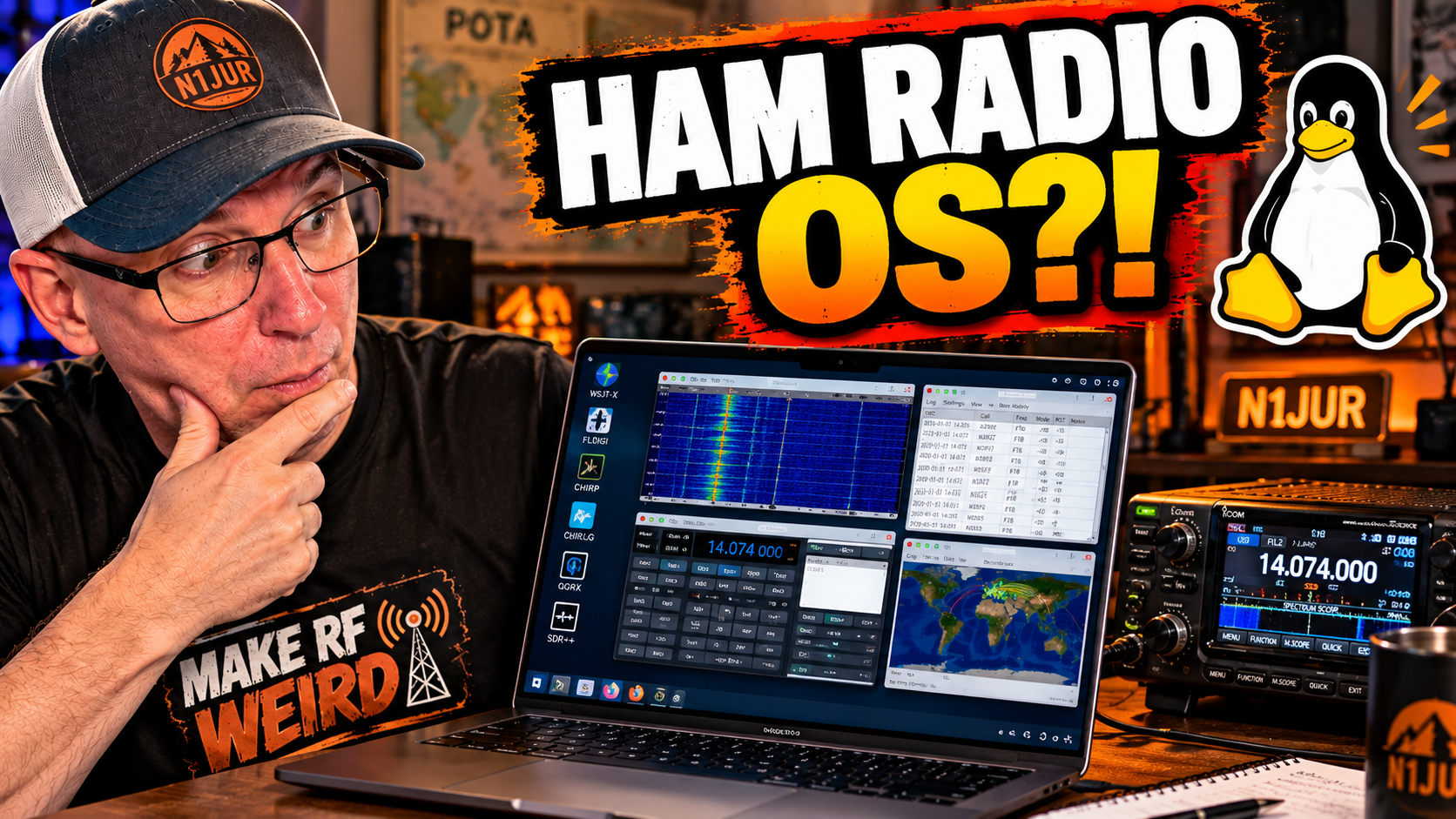
Does Ham Radio Need Its Own Operating System?
At some point, a computer in your ham shack stops being a computer.
You install logging software. Then digital-mode software. CAT control. Maybe Winlink. SDR applications. Rig-control utilities. USB drivers. Virtual audio cables.
Then you spend an evening figuring out why COM7 suddenly became COM9.
Congratulations.
You've built a ham-radio computer.
Which raises an interesting question:
Why didn't the computer start that way?
A newer Linux project called DecodiumOS got me thinking about this. It's an operating system built specifically for amateur radio, with radio applications and tools already installed.
I haven't tested it yet, so this isn't a review.
But I'm increasingly interested in the problem it's trying to solve.
Want More Portable Radio Content?
Practical portable operating, POTA discussions, gear reviews, Brew & Activate livestreams, and real-world ham radio content.
The Computer Has Become Part of the Radio
Computers aren't optional accessories in many modern stations anymore.
We use them for logging, digital modes, CAT control, SDR, programming radios, Winlink, mapping and a growing list of other jobs.
The software itself can be excellent.
The experience of making all of it work together?
Not always.
One application wants a particular audio device. Another needs the correct serial port. Something else needs CAT access. Your radio manufacturer has a driver. Windows assigns another COM port. Then two programs both want control of the same radio.
None of these individual problems are necessarily difficult.
It's the accumulation that's frustrating.
And it's especially noticeable when you're setting up a dedicated shack, portable or club computer.
You aren't really configuring a general-purpose PC anymore.
You're building a radio appliance one application at a time.
What If the Computer Started as a Radio?
That's what makes projects like DecodiumOS interesting.
DecodiumOS 1.2.0 was released in September 2026 and is based on AnduinOS 2 and Ubuntu 26.04. It bundles amateur-radio tools for digital modes, CAT rig control and SDR work. It can also boot into a live environment from a USB drive without installing the operating system on the computer. FT2 — Decodium
There's precedent for this idea, too. Debian maintains a Hamradio Pure Blend aimed at amateur-radio users, while other specialized Linux projects target particular radio applications. Debian
But the interesting part isn't Linux.
It's the concept.
Imagine taking an inexpensive laptop to the shack, booting it and having your radio tools ready.
Connect the radio.
Select it.
Choose the interface.
Start operating.
That's a much different experience from spending Saturday afternoon installing software before you can spend Saturday evening using the radio.
For a club station, emergency communications computer, portable setup or dedicated shack PC, I can see the appeal immediately.
Keep the Conversation Going
What’s one thing you stopped bringing to activations because you realized you never actually needed it? Drop into the Discord and tell the Brew Crew.
Join the N1JUR DiscordBut There's a Catch
Ham-radio hardware is messy.
One operator has an Icom.
Another has a Yaesu.
Someone else has a Kenwood that's twenty years old.
Then somebody arrives with a homebrew interface held together by three adapters, a USB sound card and sheer determination.
You know.
Ham radio.
An operating system can include applications. It can make serial-port access easier. DecodiumOS, for example, specifically configures serial access and prevents ModemManager from probing radio interfaces—one of those Linux annoyances that can interfere with CAT/PTT devices. FT2 — Decodium
But it can't magically guarantee every radio, USB interface, sound device and oddball accessory will work perfectly.
And that's where the idea succeeds or fails for me.
A ham-radio operating system only matters if it makes radio easier.
If I have to become a Linux administrator to use my radio, we've simply traded one problem for another.
The operating system should disappear into the background.
I Don't Think We Need One Official Ham Radio OS
The more I think about it, the less convinced I am that amateur radio needs the ham-radio operating system.
I think we need something slightly different:
Radio-ready computing.
Maybe that's a purpose-built Linux distribution.
Maybe it's a well-maintained software bundle.
Maybe manufacturers eventually make radio integration dramatically easier.
Maybe it's a portable environment you keep on a USB drive.
The implementation matters less to me than the experience.
I'd like to be able to tell a newer operator:
Connect your radio, select the model and start using it.
Not:
First we need to figure out which COM port Windows assigned your radio.
That difference matters if we're serious about making modern amateur radio accessible.
We've spent decades making radios easier to operate. Touchscreens, automatic tuners, waterfalls, memories and digital signal processing have eliminated a lot of complexity from the radio itself.
Then we connected the radio to a computer and put some of the complexity right back.
Like What’s Happening Here?
N1JUR is built around helping more people get active in ham radio through videos, Field Notes, POTA content, live streams, gear reviews, and community.
If you already watch the channel and want to support more of the work behind it, memberships are one way to help keep the signal going.
Videos. Field Notes. Live Streams. Community.
Membership support helps keep the N1JUR ecosystem moving without turning every page into a pledge drive wearing a callsign hat.
Learn About the Community →I Want to Try This
That's ultimately why DecodiumOS caught my attention.
Not because I think everyone should replace Windows with Linux.
And certainly not because I've tested it and can recommend it. I haven't.
I'm interested because it's asking the right question:
What would a computer look like if amateur radio were its primary job instead of something we added afterward?
DecodiumOS can run from a USB drive without installing it, which makes this particularly tempting as an experiment. FT2 — Decodium
Boot it.
Connect a radio.
Try CAT control.
Try digital modes.
Try logging.
Then find out how much configuration is actually left.
Because that's the test that matters.
I don't need another operating system to become part of my ham-radio hobby.
I need the operating system to get out of the way so I can play radio.
And if somebody can accomplish that?
Now you've got my attention.