
Field Notes from N1JUR
Real-world ham radio tips, portable operating lessons, gear thoughts, and activation stories from the field to the shack.
What You’ll Find Here
This blog is where I go deeper than a YouTube description. You’ll find practical ham radio guides, activation lessons, gear breakdowns, and field notes from real operating experiences.
Some posts are beginner-friendly. Some get a little more technical. And some are just honest lessons from the field — because not every activation goes perfectly, and that’s usually where the good stuff happens.
Portable operating tips
POTA, SOTA, and location-based activation ideas
Gear and antenna experiments
Beginner-friendly ham radio guides
Field stories and lessons learned

Connecting Communities: How Your Ham Radio Club Can Educate the Public on Amateur Radio
As a ham radio club member, you can positively impact your community by educating the public about the exciting world of amateur radio. By hosting public demonstrations, offering licensing classes, organizing field days, collaborating with schools and youth groups, and utilizing social media and online platforms, your club can reach a wider audience and inspire others to discover the joys of ham radio. Together, let's continue to connect communities and share our passion for amateur radio with the world.
Ham radio, also known as amateur radio, is a fascinating hobby that allows individuals to communicate worldwide using radio frequencies. However, many people are unfamiliar with this hobby and its potential benefits. As a ham radio club member, you have a unique opportunity to educate the public and raise awareness about the world of amateur radio. This blog post will explore creative ways for your ham radio club to get out in the community and share your passion for ham radio with others.
Host Public Demonstrations:
One of the most effective ways to educate the public about ham radio is to host public demonstrations or events. Consider setting up a booth at a local community fair, festival, or farmers' market where you can showcase different aspects of ham radio. You can demonstrate how to operate a ham radio, explain the basics of radio communication, and even allow visitors to try to send a message.
Offer Licensing Classes:
Another great way to engage with the community and promote ham radio is to offer licensing classes for those interested in becoming amateur radio operators. By providing training and resources to help individuals obtain their ham radio license, you can empower more people to join the hobby and expand the reach of amateur radio in your community.
Organize Field Days:
Field days are popular events in the ham radio community where operators set up temporary stations in outdoor locations to practice their emergency communication skills. Organizing a field day in a public park or other outdoor space can be a great way to showcase the capabilities of ham radio and engage with the community. Invite the public to observe the event, ask questions, and even participate in some hands-on activities.
Collaborate with Schools and Youth Groups:
Partnering with local schools, youth groups, or scouting organizations can be a fantastic way to introduce young people to the world of ham radio. Consider offering presentations or workshops at schools, hosting a radio merit badge event for scouts, or organizing a youth-focused ham radio contest. By engaging with young audiences, you can inspire the next generation of amateur radio operators and ensure the hobby’s longevity.
Utilize Social Media and Online Platforms:
In addition to in-person events, don't underestimate the power of social media and online platforms to educate the public about ham radio. Create a website or social media account for your ham radio club to share information, resources, and updates about upcoming events. Consider creating educational videos, blog posts, or podcasts to reach a wider audience and raise awareness about the benefits of ham radio.
As a ham radio club member, you can positively impact your community by educating the public about the exciting world of amateur radio. By hosting public demonstrations, offering licensing classes, organizing field days, collaborating with schools and youth groups, and utilizing social media and online platforms, your club can reach a wider audience and inspire others to discover the joys of ham radio. Together, let's continue to connect communities and share our passion for amateur radio with the world.
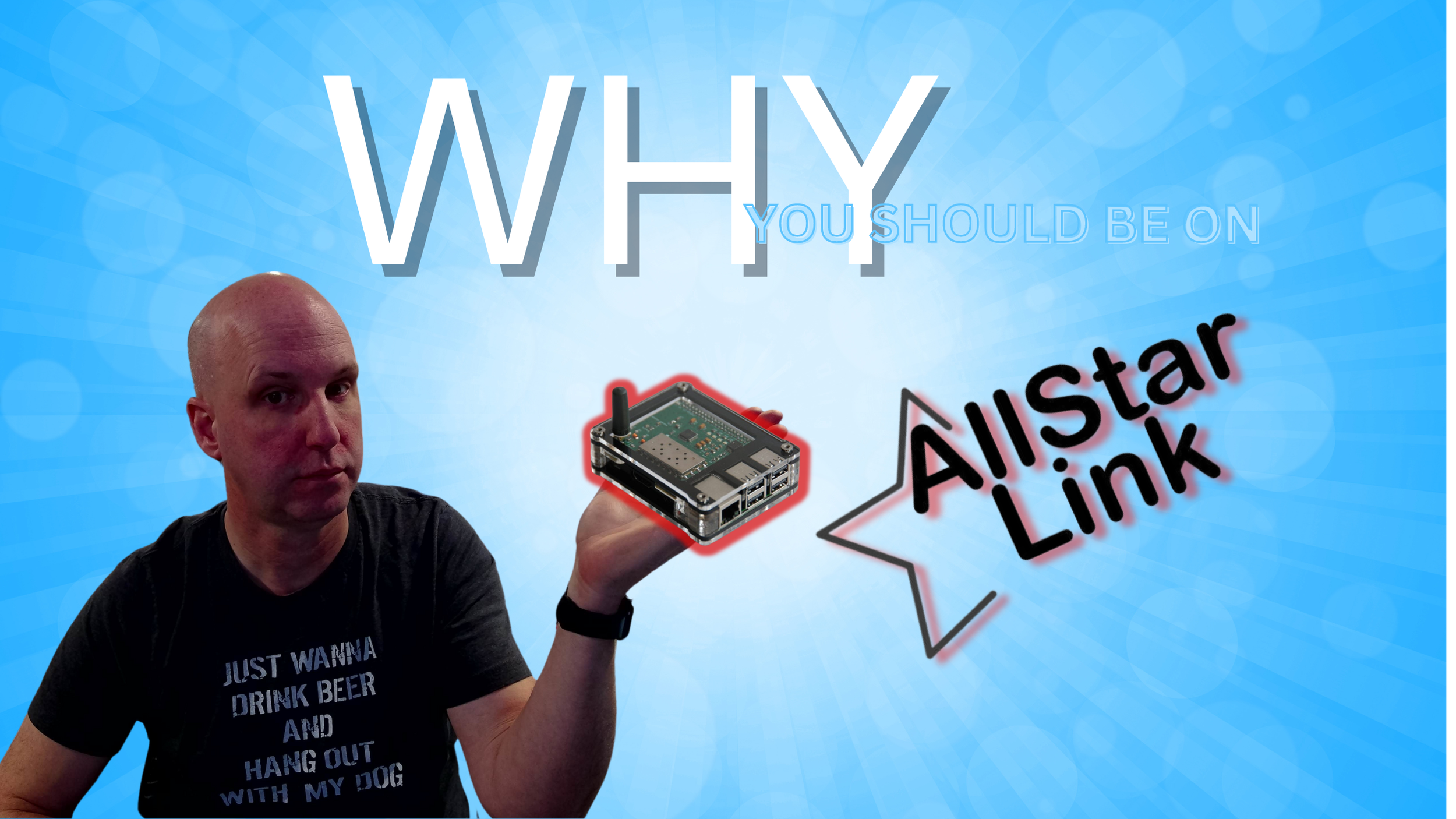
Why You Should Consider Setting Up an AllStar Link
AllStar Link is a network of amateur radio repeaters, remote base stations, and hotspots that allows for voice communication using Voice over Internet Protocol (VoIP) technology. In this blog post, we'll explore the reasons why you should consider setting up an AllStar Link and the benefits it can bring to your amateur radio activities.
Are you looking to expand your amateur radio hobby or improve communication capabilities in your community? If so, setting up an AllStar Link might be the perfect solution for you. AllStar Link is a network of amateur radio repeaters, remote base stations, and hotspots that allows for voice communication using Voice over Internet Protocol (VoIP) technology. In this blog post, we'll explore the reasons why you should consider setting up an AllStar Link and the benefits it can bring to your amateur radio activities.
1. Enhanced Communication Range
One of the primary reasons to set up an AllStar Link is the increased communication range it offers. By connecting your local repeater or hotspot to the AllStar Link network, you can communicate with other users and nodes around the world. This extended range can be especially beneficial during emergencies or when traditional communication methods are unavailable. AllStar Link essentially enables you to create a global network of communication nodes, enhancing the reach of your amateur radio activities.
2. Flexibility and Versatility
AllStar Link is known for its flexibility and versatility. It supports various hardware platforms, including low-cost single-board computers such as the Raspberry Pi, as well as more powerful systems. This means that you can set up an AllStar Link node using equipment that fits your budget and technical expertise. Additionally, AllStar Link is compatible with both analog and digital radio systems, allowing you to integrate it into your existing setup without the need for significant upgrades.
3. Community Building and Collaboration
By participating in the AllStar Link network, you become part of a larger community of amateur radio enthusiasts. This provides opportunities for collaboration, knowledge sharing, and learning from others with similar interests. AllStar Link also facilitates the creation of private networks, enabling local clubs, emergency services, and special interest groups to establish their own communication systems within the broader network.
4. Emergency Communication Preparedness
Amateur radio operators play a crucial role in providing communication support during emergencies and natural disasters. Setting up an AllStar Link node can contribute to the overall preparedness of your community by establishing an alternative communication infrastructure. In times of crisis, when traditional communication channels may be disrupted, AllStar Link can serve as a reliable means of coordinating relief efforts, sharing critical information, and maintaining contact with emergency services.
5. Learning Opportunities
For those interested in technology and telecommunications, setting up an AllStar Link node can be a valuable learning experience. It provides an opportunity to delve into the technical aspects of VoIP, networking, and radio communication protocols. Whether you are a seasoned amateur radio operator or a newcomer to the hobby, the process of configuring and maintaining an AllStar Link node can help you expand your knowledge and skills.
In conclusion, setting up an AllStar Link node offers a range of benefits, from extended communication range and community building to emergency preparedness and learning opportunities. Whether you are an individual enthusiast, a radio club, or an organization involved in emergency response, AllStar Link can enhance your amateur radio activities and contribute to the overall resilience of your community. If you're passionate about amateur radio and eager to explore new possibilities, consider joining the AllStar Link network and experience the advantages it has to offer.
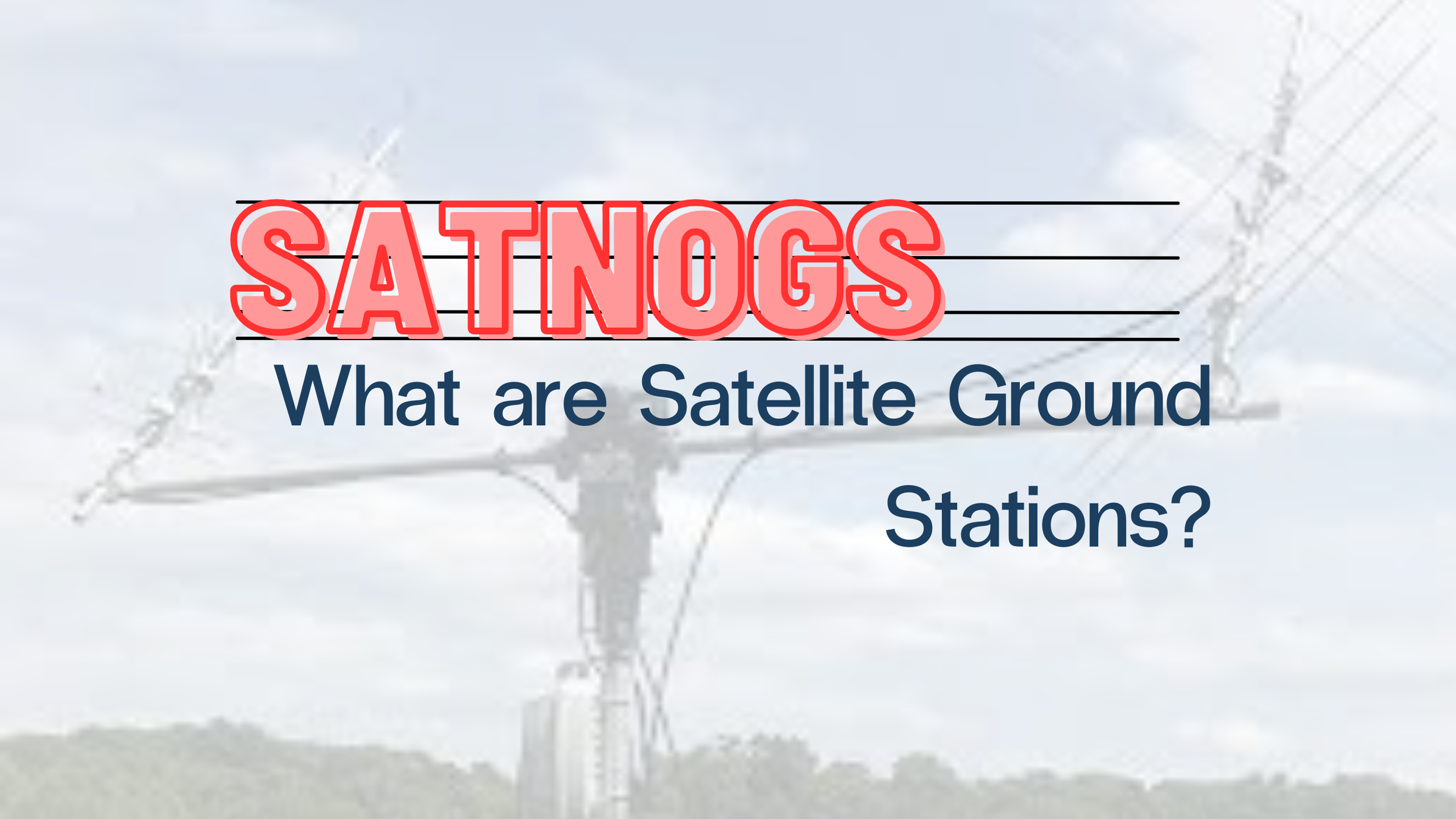
Exploring SATNOG: A Revolutionary Approach to Satellite Ground Stations
SATNOG represents a community-driven effort to establish a global network of open-source satellite ground stations, providing enthusiasts and researchers with an accessible platform for tracking, receiving, and decoding satellite transmissions. In this blog post, we'll delve into what SATNOG is, its significance, and the compelling reasons why you might want to set up a SATNOG ground station of your own.
In recent years, an innovative project has been gaining traction in the realm of amateur radio and satellite communication: the Satellite Networked Open Ground Stations (SATNOG). SATNOG represents a community-driven effort to establish a global network of open-source satellite ground stations, providing enthusiasts and researchers with an accessible platform for tracking, receiving, and decoding satellite transmissions. In this blog post, we'll delve into what SATNOG is, its significance, and the compelling reasons why you might want to set up a SATNOG ground station of your own.
What is SATNOG?
At its core, SATNOG is a project that aims to democratize access to satellite ground station technology by creating a decentralized network of ground stations across the globe. The project is built upon the principles of open-source hardware and software, enabling individuals and communities to construct, operate, and share data from their own ground stations. SATNOG ground stations are designed to track and communicate with a wide array of satellites, including amateur radio satellites, educational cubesats, and scientific missions.
The SATNOG network is powered by a web-based platform that facilitates the coordination and scheduling of ground stations, as well as the collection and dissemination of satellite telemetry and other data. This shared infrastructure allows participants to contribute to satellite missions, conduct educational outreach, and engage in citizen science initiatives by collaborating with researchers and organizations around the world.
Why Set Up a SATNOG Ground Station?
1. Access to Satellite Data and Telemetry
By setting up a SATNOG ground station, you gain the ability to receive and decode telemetry data from a diverse range of satellites. This presents an exciting opportunity to engage with real-world satellite missions, participate in scientific research, and contribute valuable data to the broader satellite community. Whether you're interested in environmental monitoring, amateur radio experimentation, or simply exploring the frontiers of space technology, a SATNOG ground station can provide you with direct access to satellite data and communications.
2. Educational and Outreach Opportunities
SATNOG ground stations are well-suited for educational initiatives and outreach programs aimed at fostering interest in science, technology, engineering, and mathematics (STEM). By integrating a ground station into educational curricula or community workshops, you can offer hands-on learning experiences that showcase the practical applications of satellite communication and tracking. Moreover, SATNOG's open and collaborative nature encourages knowledge sharing and mentorship, making it an ideal platform for nurturing the next generation of satellite enthusiasts and engineers.
3. Contributing to Citizen Science
Participating in the SATNOG network allows you to actively contribute to citizen science efforts focused on satellite missions and space exploration. By capturing and sharing satellite telemetry and observations, you can support scientific research, monitor environmental changes, and assist in the verification and validation of satellite operations. This engagement in citizen science not only enriches your own understanding of satellite technology but also has the potential to make meaningful contributions to scientific endeavors on a global scale.
4. Community Engagement and Collaboration
By establishing a SATNOG ground station, you become part of a thriving community of satellite enthusiasts, researchers, and educators who are passionate about space technology. Through the SATNOG network, you can collaborate with like-minded individuals, share your experiences, and benefit from the collective expertise of the community. This collaborative spirit fosters an environment of innovation, creativity, and knowledge exchange, leading to new discoveries and advancements in satellite communication

TOP 5 HAM IOS APPS : Part Deux
After the immense interest my previous post received on the Top 5 Ham apps, I decided to create a Part 2. Here are five new HAM apps for iOS that you should definitely have on your smartphone.
Following the positive feedback I received on my previous blog post about the best Ham Apps for iOS, I thought I'd share another list. Without further ado, here are five Ham Apps for iOS that I personally find useful. Please note that these apps are presented in no particular order, and some may be free or low-cost. For full transparency, I purchased these apps with my own money, so the reviews are solely based on my own opinion.
Let’s dive in!
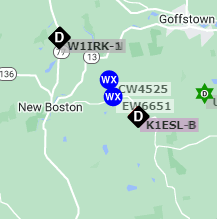
APRS is a well-liked mode utilized in ham radio. The APRS website for tracking plays a significant role in this infrastructure. Whenever possible, I employ APRS on my mobile and handheld devices. I understand that some people feel uneasy about being tracked. Still, I want to emphasize that utilizing APRS on your mobile device improves other tracking systems, particularly in VHF/UHF propagation. Your APRS data can aid in predicting when DX windows open up, as your spotting information provides insight into when and where these openings may occur. The APRS web Shortcut app is one of my smartphone's “important” apps.
APP COST: FREE

I won’t go into much detail with this app as you can easily google it and find a “butt-Ton” of reviews on the app. But if you do any Portable radio or POTA itself, you know its value as a logger. Having it on multiple platforms makes quick, speedy logging the only choice.
You're not alone if you struggle with differentiating between UTC and military time. I often try to calculate the local time when presented with UTC. But with Zulu Time, you no longer have to go through that hassle. This straightforward app has a screen widget that displays the current Zulu time and offers a time converter to help you convert local time to UTC. It's a fantastic addition to your Ham Toolbelt.
APP COST: $3.99

This app may be simple, but it offers a wealth of information when you're out in the field. It utilizes the phone's GPS to determine your latitude, longitude, altitude, and grid square. I find this app incredibly useful when I engage in digital POTA, as it simplifies setting up WSJT-X with the correct grid square.
APP COST: FREE
Building an antenna can be challenging, especially when determining the correct length of wire. While many calculators online can help, I often find myself in a situation where I need to cut the wire and can’t access my paper calculations. That's where HamAntCal comes in - I can quickly get the wire lengths I need with just a few input values. This app offers a variety of calculations for different types of antennas, including ¼ verticals, inverted V's, ½ wave dipoles, and more. Although I don't use it frequently, I always turn to HamAntCal when I need assistance with antenna building.
APP COST: $.99
These are my favorite five Ham apps for iOS. I'm interested in hearing your feedback if you've tried any of them. Additionally, if there are any other Ham apps that you use that I didn't mention, please share them in the comments section. I'm constantly on the lookout for new Ham apps to test out!

Be a POTA Ninja with Ham Alert
Has the Worked All States Award for POTA/ARRL eluded you? Well I hopefully can help with that by offering up a solution that will give you a “leg up” and get that much needed state!
I recently shared a video on YouTube regarding the use of Ham Alert and POTA Parks Page to receive automatic notifications when a park is activated. Due to my busy schedule in the past few months, I have found it difficult to keep up with the spotting page, which has made it challenging to chase down the last three states for "Worked All States" - Alaska, Hawaii, and DC. However, I discovered that Ham Alert now allows trigger filters for "multiple lists" of parks, and I created a tutorial video on how to set this up. Furthermore, I have documented the process in a blog post that may be helpful for those interested in using Ham Alert.
Here are the steps for setting up Ham Alert for State Reference Notifications
What you’ll need:
The list of States you need to complete WAS
A login for POTA.APP and HamAlert.org
Steps:
From the POTA.APP page, go to the Curtain Menu on the left of the site and click Park Lists
From the search box, enter the state you want the park list from and select that reference.
After viewing the list, click on the right-hand side “download” and select CSV.
Once you download the CSV file, open it up in your favorite spreadsheet editor.
You will now select all rows in the first column titled “reference,” as these will be all the active parks for that state. You should copy them into your memory.
Now open up Ham Alert and click the “+” to create a new trigger.
From the trigger window, select the source from the dropdown.
Click the dropdown and select POTA from the list of Sources
Then click out of the box and click the next trigger and select “POTA Reference list.”
Paste all the park references into the box and click outside. It will sort and organize the list with the proper spacing and commas.
Next, you choose the action you want to be notified of. Note: This will generate more alerts than you used to be so prepared if you use SMS or email. I prefer using the App option.
In the comments field, use a clear and concise description, as the report will be in the details of the notification. You’ll use this reference to determine why you got this Ham Alert.
Click save and “rinse, lather, and repeat” with all the other states you need to create triggers for.
Conclusion
This process is a great way to understand how Ham Alert can be the tool to notify you in real-time that a contact is waiting for a QSO.