
Field Notes from N1JUR
Real-world ham radio tips, portable operating lessons, gear thoughts, and activation stories from the field to the shack.
What You’ll Find Here
This blog is where I go deeper than a YouTube description. You’ll find practical ham radio guides, activation lessons, gear breakdowns, and field notes from real operating experiences.
Some posts are beginner-friendly. Some get a little more technical. And some are just honest lessons from the field — because not every activation goes perfectly, and that’s usually where the good stuff happens.
Portable operating tips
POTA, SOTA, and location-based activation ideas
Gear and antenna experiments
Beginner-friendly ham radio guides
Field stories and lessons learned

Beachside Adventures with My Portable Ham Radio Setup
Summer is the perfect time to combine two of my favorite hobbies: spending time at the beach and operating my ham radio. This year, I decided to take my portable ham radio setup on vacation, turning my beachside retreat into a unique blend of relaxation and amateur radio fun. Here’s a look at my experience, from setting up on the sandy shore to making contacts across the globe.
Summer is the perfect time to combine two of my favorite hobbies: spending time at the beach and operating my ham radio. This year, I decided to take my portable ham radio setup on vacation, turning my beachside retreat into a unique blend of relaxation and amateur radio fun. Here’s a look at my experience, from setting up on the sandy shore to making contacts across the globe.
Preparation
Before hitting the beach, I made sure to pack all the essentials for my portable ham radio setup:
- **Transceiver**: My trusty portable transceiver, lightweight and perfect for travel.
- **Antenna**: A portable, collapsible antenna that’s easy to set up on the beach.
- **Power Supply**: A rechargeable battery pack to keep everything running smoothly.
- **Accessories**: Cables, connectors, a small table, and a comfortable chair.
I also packed the usual beach gear: sunscreen, a hat, plenty of water, and snacks. Staying comfortable and hydrated is key when you’re spending extended time outdoors.
Setting Up at the Beach
Once I arrived at my favorite beach spot, I found a suitable location to set up my ham radio station. I looked for a spot that was relatively secluded to avoid interfering with other beachgoers’ activities. Here’s a step-by-step of my setup process:
1. **Choose the Spot**: I picked a spot with a good view of the ocean, away from the crowded areas. This not only ensured a peaceful operating environment but also minimized the risk of accidental antenna damage.
2. **Assemble the Antenna**: The collapsible antenna was easy to set up. I secured it in the sand using a sturdy mount and extended it to its full height.
3. **Set Up the Transceiver**: I placed my transceiver on the small table, connected it to the antenna, and hooked it up to the battery pack.
4. **Check the Equipment**: Before diving into operation, I made sure all connections were secure and the equipment was functioning correctly.
With everything set up, it was time to start operating. The combination Operating from the Beach
of the ocean’s calming sounds and the excitement of making new contacts made for an unforgettable experience. Here are some highlights:
- **Great Propagation**: Being near the water helped improve signal propagation. I was able to make contact with operators from various parts of the world, including Europe and Asia.
- **Curious Onlookers**: A few beachgoers stopped by to ask about my setup. It was a great opportunity to share my passion for ham radio and explain how it works.
- **Logbook Entries**: I kept a detailed log of all my contacts, noting the time, frequency, and signal reports. This not only helps in keeping track of my activities but also serves as a great memento of the day.
Tips for Operating Portable Ham Radio at the Beach
Here are a few tips based on my experience:
- **Weather Check**: Always check the weather forecast before heading out. Sudden rain or strong winds can pose challenges.
- **Protection**: Keep your equipment safe from sand and saltwater. Use covers and cases as needed.
- **Hydration and Shade**: Stay hydrated and take breaks in the shade to avoid heat exhaustion.
- **Respect Beachgoers**: Be mindful of others around you. Avoid setting up in crowded areas and keep noise levels low.
Conclusion
Taking my portable ham radio setup to the beach was an incredible experience that combined relaxation with the thrill of amateur radio operation. The unique setting provided excellent propagation conditions and made for memorable contacts. Whether you’re an experienced operator or a newcomer, I highly recommend trying a portable setup at the beach. It’s a fantastic way to enjoy the best of both worlds!
I hope this inspires you to take your ham radio on your next beach vacation. Happy operating, and 73!

Connecting Communities: How Your Ham Radio Club Can Educate the Public on Amateur Radio
As a ham radio club member, you can positively impact your community by educating the public about the exciting world of amateur radio. By hosting public demonstrations, offering licensing classes, organizing field days, collaborating with schools and youth groups, and utilizing social media and online platforms, your club can reach a wider audience and inspire others to discover the joys of ham radio. Together, let's continue to connect communities and share our passion for amateur radio with the world.
Ham radio, also known as amateur radio, is a fascinating hobby that allows individuals to communicate worldwide using radio frequencies. However, many people are unfamiliar with this hobby and its potential benefits. As a ham radio club member, you have a unique opportunity to educate the public and raise awareness about the world of amateur radio. This blog post will explore creative ways for your ham radio club to get out in the community and share your passion for ham radio with others.
Host Public Demonstrations:
One of the most effective ways to educate the public about ham radio is to host public demonstrations or events. Consider setting up a booth at a local community fair, festival, or farmers' market where you can showcase different aspects of ham radio. You can demonstrate how to operate a ham radio, explain the basics of radio communication, and even allow visitors to try to send a message.
Offer Licensing Classes:
Another great way to engage with the community and promote ham radio is to offer licensing classes for those interested in becoming amateur radio operators. By providing training and resources to help individuals obtain their ham radio license, you can empower more people to join the hobby and expand the reach of amateur radio in your community.
Organize Field Days:
Field days are popular events in the ham radio community where operators set up temporary stations in outdoor locations to practice their emergency communication skills. Organizing a field day in a public park or other outdoor space can be a great way to showcase the capabilities of ham radio and engage with the community. Invite the public to observe the event, ask questions, and even participate in some hands-on activities.
Collaborate with Schools and Youth Groups:
Partnering with local schools, youth groups, or scouting organizations can be a fantastic way to introduce young people to the world of ham radio. Consider offering presentations or workshops at schools, hosting a radio merit badge event for scouts, or organizing a youth-focused ham radio contest. By engaging with young audiences, you can inspire the next generation of amateur radio operators and ensure the hobby’s longevity.
Utilize Social Media and Online Platforms:
In addition to in-person events, don't underestimate the power of social media and online platforms to educate the public about ham radio. Create a website or social media account for your ham radio club to share information, resources, and updates about upcoming events. Consider creating educational videos, blog posts, or podcasts to reach a wider audience and raise awareness about the benefits of ham radio.
As a ham radio club member, you can positively impact your community by educating the public about the exciting world of amateur radio. By hosting public demonstrations, offering licensing classes, organizing field days, collaborating with schools and youth groups, and utilizing social media and online platforms, your club can reach a wider audience and inspire others to discover the joys of ham radio. Together, let's continue to connect communities and share our passion for amateur radio with the world.

Enhancing Emergency Preparedness: The Benefits of the Amateur Radio Emergency Preparedness Act for Amateur Radio Operators
The potential benefits of the Amateur Radio Emergency Preparedness Act for amateur radio operators are significant, ranging from formal recognition of their role in emergencies to enhanced coordination, support, and interoperability. If passed into law, this act has the potential to empower hams to be even more effective first responders during times of crisis and further enhance the resilience of communities across the country. Let's continue to support and advocate for measures that recognize the invaluable contributions of amateur radio operators in emergency preparedness and response efforts.
Amateur radio operators, or hams, play a critical role in emergency communications during times of crisis and natural disasters. The Amateur Radio Emergency Preparedness Act, currently under consideration, aims to further empower and support amateur radio operators in their essential role as first responders. In this blog post, we will explore the potential benefits of this act for hams if it passes into law and how it can enhance emergency preparedness efforts across the amateur radio community.
Formal Recognition of Amateur Radio's Role in Emergencies:
One of the key benefits of the Amateur Radio Emergency Preparedness Act is the formal recognition of the important role that amateur radio operators play in emergency communications. By acknowledging the value of hams in providing vital communication services during disasters, the act raises awareness of the capabilities and contributions of the amateur radio community.
Enhanced Coordination and Support:
If the act is passed into law, amateur radio operators may benefit from enhanced coordination and support from government agencies and emergency management organizations. This could include improved access to resources, training, and funding to help hams better prepare for and respond to emergencies, ensuring a more effective and coordinated response during times of crisis.
Streamlined Licensing and Regulatory Processes:
The Amateur Radio Emergency Preparedness Act may also lead to streamlined licensing and regulatory processes for amateur radio operators involved in emergency communications. Simplifying administrative procedures and reducing bureaucratic hurdles can help hams focus on their critical communication duties during emergencies without unnecessary obstacles.
Improved Interoperability and Integration:
By promoting collaboration and interoperability among different emergency communication networks, the act can help amateur radio operators better integrate into existing emergency response systems. This enhanced coordination can lead to more efficient communication exchanges between hams, first responders, and emergency management agencies, ultimately improving overall response efforts.
Increased Community Resilience:
Ultimately, the Amateur Radio Emergency Preparedness Act has the potential to strengthen community resilience by empowering and supporting amateur radio operators in their emergency communication activities. Providing hams with the tools, resources, and recognition they need to respond to disasters effectively can help communities better prepare for and recover from emergencies, ultimately saving lives and mitigating the impact of disasters.
The potential benefits of the Amateur Radio Emergency Preparedness Act for amateur radio operators are significant, ranging from formal recognition of their role in emergencies to enhanced coordination, support, and interoperability. If passed into law, this act has the potential to empower hams to be even more effective first responders during times of crisis and further enhance the resilience of communities across the country. Let's continue to support and advocate for measures that recognize the invaluable contributions of amateur radio operators in emergency preparedness and response efforts.
Exploring the Differences and Benefits of Popular Ham Radio Logging Applications
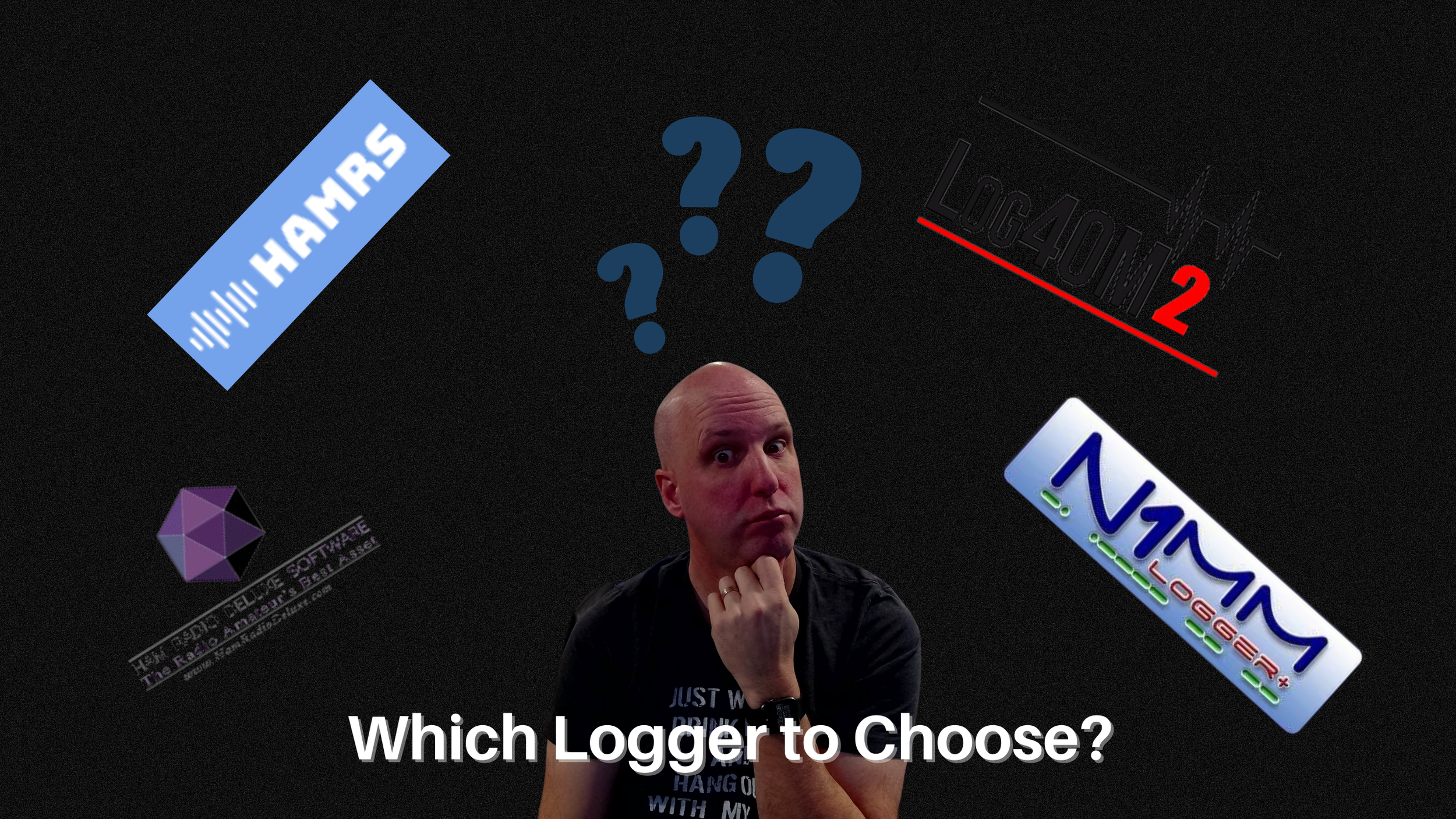
With a wide array of logging software available, each offering unique features and capabilities, it can be challenging to determine which application best suits your specific needs. In this blog post, we'll explore some of the most popular ham radio logging applications, highlighting their differences and the advantages they offer to radio enthusiasts.
In the world of amateur radio, logging applications play a crucial role in managing contacts, tracking activities, and organizing essential information for radio operators. With a wide array of logging software available, each offering unique features and capabilities, it can be challenging to determine which application best suits your specific needs. In this blog post, we'll explore some of the most popular ham radio logging applications, highlighting their differences and the advantages they offer to radio enthusiasts.
1. Ham Radio Deluxe (HRD)
Ham Radio Deluxe is a comprehensive suite of tools designed to meet the needs of amateur radio operators. The software provides logging, rig control, digital modes, satellite tracking, and more, all integrated into a single platform. HRD offers a user-friendly interface and supports a wide range of transceivers and accessories, making it a versatile choice for operators with diverse equipment setups. Additionally, HRD's integration of various functions streamlines the logging process and enhances the overall operational efficiency for radio enthusiasts.
Pros:
- All-in-one solution for logging, rig control, and digital modes
- User-friendly interface
- Extensive support for different transceivers and accessories
2. N1MM Logger+
N1MM Logger+ is a popular contest logging software known for its robust features tailored specifically for contesting activities. The application provides advanced contest-specific tools, such as multipliers tracking, dupe checking, and scoring, making it an indispensable tool for competitive radio operators. N1MM Logger+ is highly customizable, allowing users to configure the software to suit their specific contesting needs and preferences.
Pros:
- Specialized features for contest logging
- Highly customizable
- Strong support for various contest formats and rules
3. Log4OM
Log4OM is a feature-rich logging software that excels in providing a comprehensive and customizable logging experience. The application offers support for a wide range of features, including DX cluster integration, satellite tracking, QSO mapping, and awards tracking. Log4OM's flexible interface allows users to tailor the software to their individual preferences, ensuring that it meets the specific requirements of diverse operating styles and preferences.
Pros:
- Comprehensive feature set, including DX cluster integration and awards tracking
- Customizable interface to match individual preferences
- Strong support for satellite tracking and mapping
4. QRZ Logbook
QRZ Logbook is an online logging service that offers a convenient and accessible platform for managing amateur radio contacts. The service enables users to log their contacts online, access their logs from any internet-connected device, and benefit from extensive call sign database integration. QRZ Logbook also provides features for QSL management, award tracking, and real-time propagation information.
Pros:
- Online accessibility and synchronization across devices
- Extensive call sign database integration
- QSL management and award tracking features
In conclusion, the choice of a ham radio logging application ultimately depends on your specific needs, operating preferences, and equipment setup. Whether you prioritize all-in-one functionality, specialized contesting features, comprehensive logging capabilities, or online accessibility, there is a logging application that can cater to your requirements. By considering the unique features and benefits of each logging software, you can make an informed decision and enhance your amateur radio experience with an application that best aligns with your operational goals.
Exploring SATNOG: A Revolutionary Approach to Satellite Ground Stations
SATNOG represents a community-driven effort to establish a global network of open-source satellite ground stations, providing enthusiasts and researchers with an accessible platform for tracking, receiving, and decoding satellite transmissions. In this blog post, we'll delve into what SATNOG is, its significance, and the compelling reasons why you might want to set up a SATNOG ground station of your own.
In recent years, an innovative project has been gaining traction in the realm of amateur radio and satellite communication: the Satellite Networked Open Ground Stations (SATNOG). SATNOG represents a community-driven effort to establish a global network of open-source satellite ground stations, providing enthusiasts and researchers with an accessible platform for tracking, receiving, and decoding satellite transmissions. In this blog post, we'll delve into what SATNOG is, its significance, and the compelling reasons why you might want to set up a SATNOG ground station of your own.
What is SATNOG?
At its core, SATNOG is a project that aims to democratize access to satellite ground station technology by creating a decentralized network of ground stations across the globe. The project is built upon the principles of open-source hardware and software, enabling individuals and communities to construct, operate, and share data from their own ground stations. SATNOG ground stations are designed to track and communicate with a wide array of satellites, including amateur radio satellites, educational cubesats, and scientific missions.
The SATNOG network is powered by a web-based platform that facilitates the coordination and scheduling of ground stations, as well as the collection and dissemination of satellite telemetry and other data. This shared infrastructure allows participants to contribute to satellite missions, conduct educational outreach, and engage in citizen science initiatives by collaborating with researchers and organizations around the world.
Why Set Up a SATNOG Ground Station?
1. Access to Satellite Data and Telemetry
By setting up a SATNOG ground station, you gain the ability to receive and decode telemetry data from a diverse range of satellites. This presents an exciting opportunity to engage with real-world satellite missions, participate in scientific research, and contribute valuable data to the broader satellite community. Whether you're interested in environmental monitoring, amateur radio experimentation, or simply exploring the frontiers of space technology, a SATNOG ground station can provide you with direct access to satellite data and communications.
2. Educational and Outreach Opportunities
SATNOG ground stations are well-suited for educational initiatives and outreach programs aimed at fostering interest in science, technology, engineering, and mathematics (STEM). By integrating a ground station into educational curricula or community workshops, you can offer hands-on learning experiences that showcase the practical applications of satellite communication and tracking. Moreover, SATNOG's open and collaborative nature encourages knowledge sharing and mentorship, making it an ideal platform for nurturing the next generation of satellite enthusiasts and engineers.
3. Contributing to Citizen Science
Participating in the SATNOG network allows you to actively contribute to citizen science efforts focused on satellite missions and space exploration. By capturing and sharing satellite telemetry and observations, you can support scientific research, monitor environmental changes, and assist in the verification and validation of satellite operations. This engagement in citizen science not only enriches your own understanding of satellite technology but also has the potential to make meaningful contributions to scientific endeavors on a global scale.
4. Community Engagement and Collaboration
By establishing a SATNOG ground station, you become part of a thriving community of satellite enthusiasts, researchers, and educators who are passionate about space technology. Through the SATNOG network, you can collaborate with like-minded individuals, share your experiences, and benefit from the collective expertise of the community. This collaborative spirit fosters an environment of innovation, creativity, and knowledge exchange, leading to new discoveries and advancements in satellite communication