
Getting Ham Radio Out of the Shack—and Into the Community
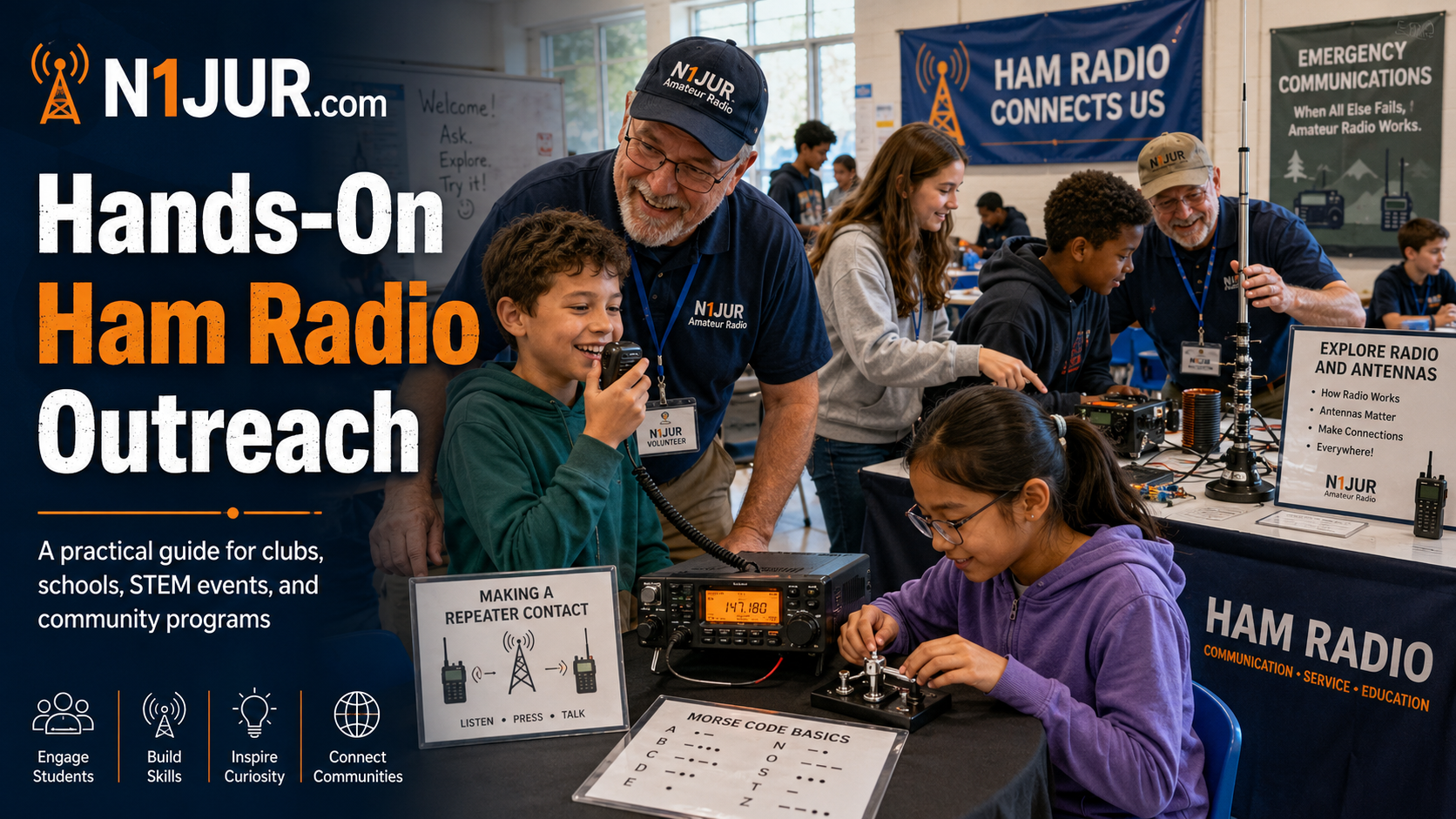
We talk a lot about growing amateur radio, attracting younger people, and getting more folks interested in the hobby. But at some point, we have to do more than talk about it.
We have to put a radio in someone’s hand.
Over the past several events with my local club, the Granite State Amateur Radio Association, we have been working through what it actually takes to bring ham radio into schools, youth programs, STEM events, community organizations, and other public settings.
And we have learned something important: people do not want to stand in front of a table and listen to us explain every feature of a radio.
They want to touch it. They want to push the button. They want to hear someone answer.
Kids can learn how to send their name in Morse code, make a supervised contact through a local repeater using an HT, experiment with antennas, and see that amateur radio is more than a collection of equipment sitting on a folding table.
These are not just ideas we collected from the internet. These are steps and activities that we have practiced through GSARA while building our own community and youth outreach efforts.
To help other clubs create something similar, I put together the Community Outreach Playbook. It covers how to approach schools, 4-H groups, VFW posts, STEM programs, and other organizations, along with suggestions for setting up hands-on demonstrations, recruiting club volunteers, planning the event, and keeping the program growing after the first event is over.
You do not need a massive budget or a trailer full of equipment to get started. You need a few enthusiastic volunteers, some simple activities, and a willingness to let people experience radio for themselves.
Whether your club is preparing for a classroom visit, a youth program, a STEM fair, or a larger community event, this guide gives you a practical place to begin.
Download the Community Outreach Playbook
The next generation of amateur radio operators may not discover the hobby by walking into a club meeting. They may discover it because someone handed them an HT, helped them press the push-to-talk button, and another voice came back through the speaker.