Field Notes from N1JUR
Real-world ham radio tips, portable operating lessons, gear thoughts, and activation stories from the field to the shack.
What You’ll Find Here
This blog is where I go deeper than a YouTube description. You’ll find practical ham radio guides, activation lessons, gear breakdowns, and field notes from real operating experiences.
Some posts are beginner-friendly. Some get a little more technical. And some are just honest lessons from the field — because not every activation goes perfectly, and that’s usually where the good stuff happens.
Portable operating tips
POTA, SOTA, and location-based activation ideas
Gear and antenna experiments
Beginner-friendly ham radio guides
Field stories and lessons learned

Raise our Fees!
In the latest QST Editorial, they discuss considering the increase of ARRL Membership. I dive into it a little and share my opinion on the matter.
In the latest QST Editorial (found here), they discuss considering the increase of ARRL Membership. I dive into it a little and share my opinion on the matter.
The ARRL is a not-for-profit organization with a mission to advance the art, science, and enjoyment of Amateur Radio. The ARRL funds its operations through membership dues, grants, and other contributions. As an ARRL Member, I firmly believe that a proposed Membership increase is needed to keep up with the additions.
Here is a little background for my visitors who don’t know the ARRL.
The ARRL Headquarters building in Connecticut houses the League's administrative staff, as well as its library collection and museum artifacts. The headquarters also houses the League's editorial team for QST magazine; the publishing office for books such as "The ARRL Handbook" (the most widely used reference guide for Amateur Radio); a production facility that produces printed materials such as certificates or awards; an audiovisual department responsible for making videos about Amateur Radio activities; an IT department that maintains web sites; plus many other departments needed to keep everything running smoothly! They are a business that supports the Ham Radio community and supports us when governments try to restrict our antennas and activities locally.
Representing Hams who are hand-tied by HOA Lobbyists
The opposition to amateur radio is strong and growing. The HOA lobby has been gaining strength, with more than 2,000 registered lobbyists in Washington, DC, alone. This means more people are working against us than those supporting our cause.
The power of these lobbyists cannot be underestimated; they can make or break legislation that affects the future of amateur radio across America. Suppose we want to see positive changes happen in our favor. In that case, we need the ARRL to be financially strong to go to bat and advocate.
The Benefits of ARRL's Fees
The ARRL's fees are used to support their many services and programs. These include:
Funding for educational programs, including the National Parks on the Air (NPOTA) program and the Youth in Amateur Radio (Youth Ham Radio) initiative.
Resources for amateur radio operators include a monthly magazine mailed to all members and an online database of radio equipment and antennas.
Support for amateur radio advocacy efforts, such as working with Congress on legislation affecting our hobby or testifying before state legislatures when they consider bills that could impact hams' ability to operate their stations freely. Which is a big one for those who live in HOA-restricted places.
How ARRL Fees Support Amateur Radio
When I hear folks mention how they feel they aren’t getting the “value” for membership in the ARRL. But here are how some of our fees support Amateur Radio in several ways:
ARRL's Initiatives: The League's initiatives include developing and implementing programs and services that benefit all amateurs, such as Amateur Radio Emergency Communications (AREC) training courses; the annual National Conference on Emergency Communications (NEC); Ham Aid kits for disaster response; and more.
ARRL Advocacy: Through its Washington Office, the League advocates on behalf of Amateur Radio before Congress and federal agencies to ensure it remains free from unnecessary regulation or restriction by government entities.
ARRL Commitment: The ARRL has been committed since its founding in 1914 to serving its members through volunteerism, community service, and public information programs designed to promote understanding of Amateur Radio among non-hams who may be interested in learning more about this unique hobby/service opportunity but don't know where or how they can get involved locally with their local club(s).
The Impact of ARRL Fees
The ARRL is a non-profit organization that relies on membership dues and donations to fund its operations. The League has been around for over 100 years and continues to provide valuable services for amateur radio operators across the country.
The benefits of membership are many: Members receive copies of QST magazine every month; they can attend local club meetings or conventions; they have access to online forums where they can ask questions about their equipment or get advice from other hams who've been there before them; members have access to free training courses offered by ARRL Field Organization volunteers. These are only some of the many ways that being an ARRL member helps you get more out of your hobby!
What ARRL Fees Mean for Amateur Radio
The ARRL is the national association for Amateur Radio, and it's the organization that supports amateur radio in the US. The ARRL has many roles, including:
Supporting Amateur Radio by providing training resources and certification programs
Promoting Amateur Radio through public relations campaigns and outreach efforts
Providing legal protection for hams who operate on frequencies reserved for them by law.
The Need for ARRL to Increase Fees
The ARRL is the national amateur radio association responsible for many activities that help make Amateur Radio fun. The organization provides training materials, publishes magazines and books about the hobby, sponsors conferences, and conventions, supports local clubs, and more.
These fees are used to pay for things like:
The magazine QST (Quarterly Communication)
The website ARRL.org
National conventions such as Hamvention® or Dayton Hamvention®
Scholarships for Youth, STEM Support and education (Pioneered by Steve K5ATA), and other projects that fund the advancement of the hobby.
Why am I for the increase?
You may be wondering why the ARRL needs to raise its fees. The answer is simple: it's because of all the benefits of being a member of this organization. As an ARRL member, you get access to a wide range of resources and services that can help you improve your skills as a ham radio operator.
They are our representatives in Congress and our local communities. When they support us, how are we going to help them?
Please let me know what your thoughts are. Do you know if these increases are overdue? Should the ARRL just cut back? Let me know in the comments.

Tips on Activating during Contesting weekends
Ever venture out during a contest weekend to activate a Park? We’ll I made that mistake and wanted to share with you some of my life lessons to help make you a better activator
This post has been an idea I have had bouncing around in my head for a while now. I, as a rule of thumb, try not to activate during a contest weekend.
Before you start rolling your eyes or finger point, I know that, in general terms, it’s not the toughest thing to accomplish.
However, for a relatively new ham working, an “everyday” activation has its challenges. Adding in crowded bands, propagation issues, and technical challenges, elevates the bar quite high.
So I took this time to give it a try during CQ QPX Weekend. I posted the video of the activation below.
But here are my takeaways that hopefully can help you when you should run into this scenario.
When activating during a contest weekend, you should….
Be patient - Know that going in the bands will be VERY crowded. Trying to find an activation spot will be flanked with contester one and two kilohertz above your frequency, running some power. Knowing this will keep you level-headed and help you decide on a location. Remember, you can use all the bands -even the WARC ones.
Hunt! - Yes, you can hunt. Most of the contester’s won’t need your park number. You need to know the exchange and work those stations as if they were in your log.
Be Creative - understand that you may have to use other modes or bands to activate the park. I came up short in activating K-4950, but instead of packing it in, I used 2m FM simplex and called out on 146.52 to get the 2 or 3 contacts I needed. The motto is “Use what you brought” and “Use all the bands you can!”
FILTERS, FILTERS, FILTERS! - If your radio has filtering ex. DNR, Noise Reduction, Shift and width you, and you can find a relative open frequency. Then use them to filter out the louder stations above or below you and just work stations you can hear clearly. Learning to pull out the “5-watt QRP” station isn’t the time or place. Treat your activation like a contest and work as many “Qs” in the time you’re allotted.
There are many others, but these four are the best suggestions I can offer and helped me get Reed’s Ferry Activated that day.
Remember, POTA is a process, and every activation is a place to learn your equipment and communication skills for the future.
If there are any other tips I may have missed, I’d love to hear them. Please post them in the comments below.

QSL Cards? Are they relevant in the hobby?
Are QSL cards still relevant in the hobby? I still think so, its a great medium and one that brings joy.
I recently received an email from another ham introducing himself, and in the conversation thread, he posed the question,
“Do I have my own QSL Card?”
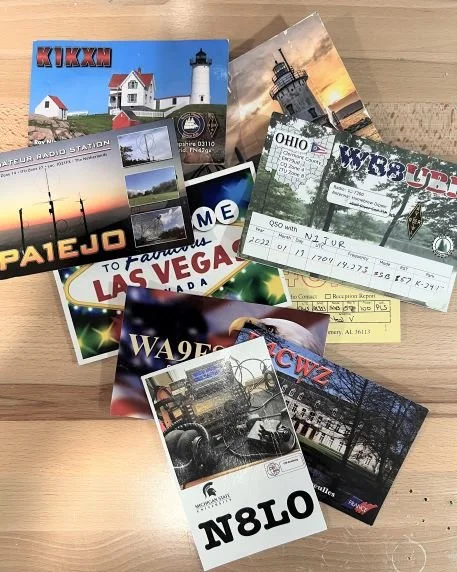
After replying with an initial No, It got me thinking.
QSL cards have been a tradition in the ham radio community for many years. They confirm communication between two operators and are often exchanged to commemorate the contact. While some may argue that QSL cards are outdated in the age of digital communication, they remain an essential part of the ham radio hobby for many operators.
QSL cards are still relevant because they offer a tangible way to remember a contact. Many hams enjoy collecting QSL cards to document their communication history and display their achievements. Additionally, QSL cards can be a way to connect with other hams around the world and learn about different cultures.
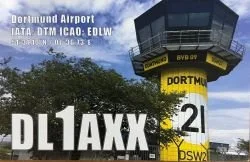
Another reason QSL cards are still used is that they can be used as proof of communication for awards and contests. Many contests require QSL cards as proof of contact, and some awards can only be earned by exchanging QSL cards with a certain number of countries or regions.
Overall, while digital communication has undoubtedly changed how hams communicate, QSL cards remain an essential part of the hobby for many operators. They offer a tangible way to remember and commemorate contacts and can be used as proof of communication for awards and contests.
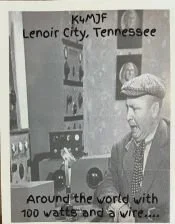
What do you think?
Post in the comments, and let me know!

5 Ham Podcasts you need to listen to
If you love to listen to podcasts then you don’t want to miss my top 5 podcasts that I listen to in my playlists.
If you’re like me, you search high and low to find good Ham Radio and Portable Operations content. When in the sea of YouTube Channels, the shows that export a podcast can sometimes make you feel like an outsider, as their shows cater to a live audience, so when you listen, it’s like you missed the “inside” joke from the last night’s party.
Don’t get me wrong, those shows have a special place in my playlists, but it’s usually on long drives where I need some “background music” or want a quick laugh.
The point of this post is that I’m always on the “hunt” for a good podcast on everything related to ham radio. When I was thinking about what I was going to blog about this week, I thought there must be other folks that could benefit from my playlist.
So without any more delay, here are my top 5 Ham Podcasts in my playlist.
One of my favorite podcasts so far. I am not an electronics nerd but after listening to this show it always inspires me to want to open my wallet.

I am always inspired when I listen to Eric Guth 4Z1UG as host. His guests are always interesting, even when our backgrounds are twenty years apart. This show is a great story telling format and I am never disappointed with his guests.
The HRCC Podcast is a great well, polished show. Although it can sometimes be long - which doesn’t bother me, listening to the husband and wife team talk about ham radio, family, and general life is always a win in my book. Check them out.
Make it stand out
I am an avid Portable Ops and POTA Guy. Nj7V Charlie of Red Summit RF Channel does a great job of always keeping his bi-weekly content fresh and interesting. This is a great “grass roots” podcast you should have in your playlist
The Ham Radio Clubhouse is the “Red herring” to the other four pods I recommend. I akin it to my youth when all my uncles would gather outside in the gazebo on a hot summer night, light up a cigar, drink beers, and make fun of each other—sharing about the good ole days. The plus is that you’ll also sometimes get ham radio content too!

Making Memories
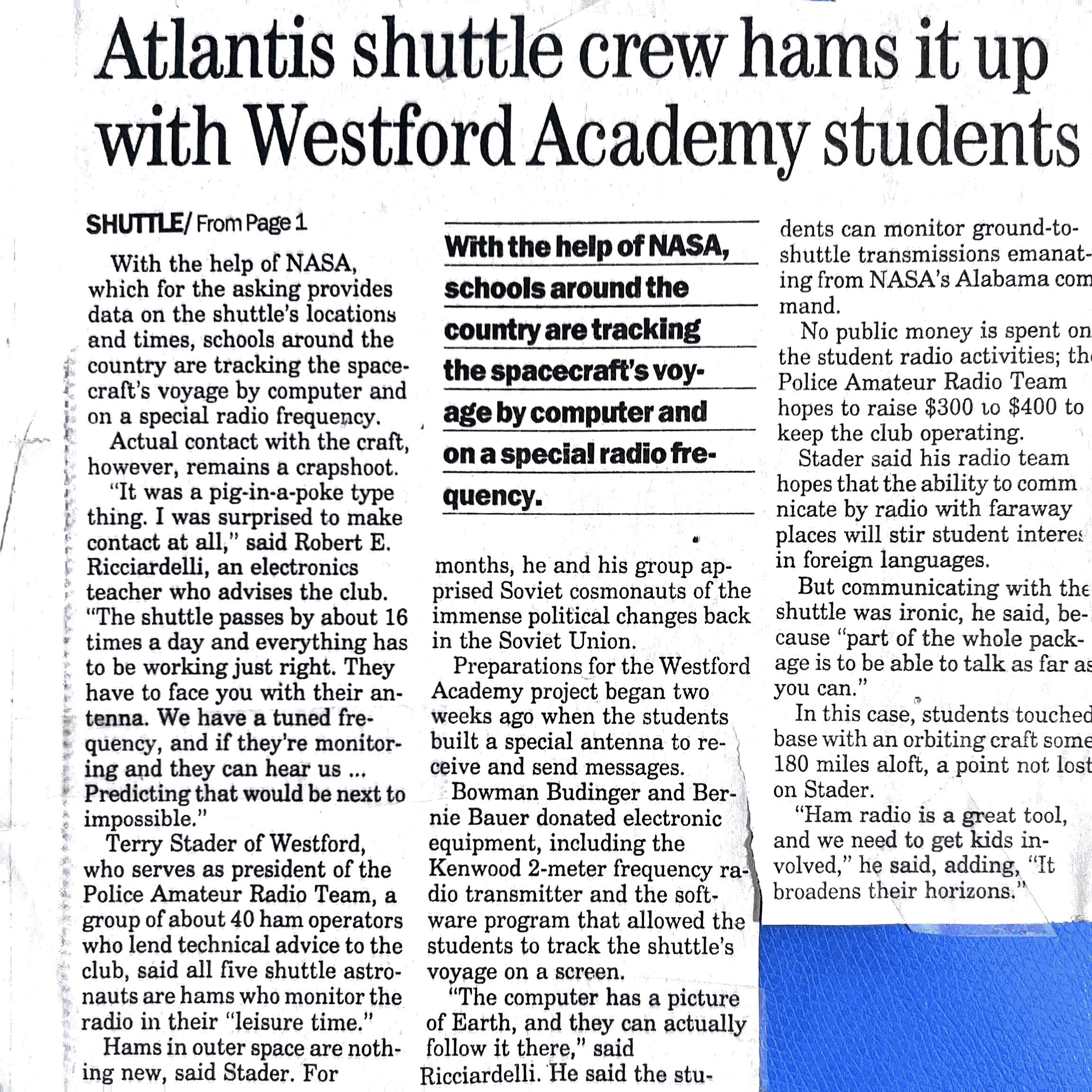
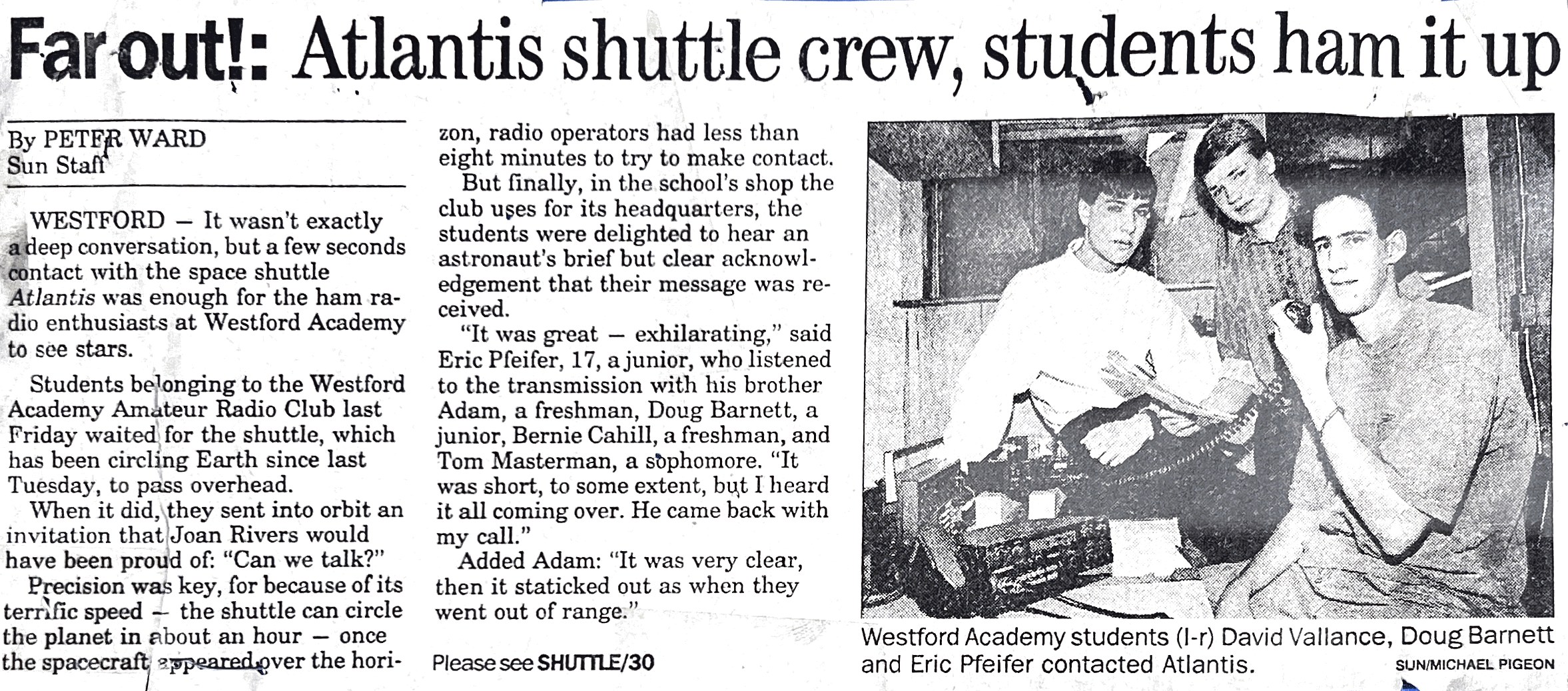
My first experience with making contact with the Space Shuttle Atlantis as a Technician
I recently stumbled upon my QSL Card box, and in it, I found an article clipping my mother had kept when I was in HS.
I was a nerd in school and could always be found in the computer lab or electronics shop. If you read about me, you’d know I got my amateur license in 1991 and became so involved in my hobby that I helped start a Ham Radio Club in my High School to get a teacher pass to play radio! Just kidding!
So back to the article…
The local club PART furnished us with a VHF radio and a vertical antenna mounted on the roof. We were given a radio room just off the shop area when we established the club. Now around that time, NASA had several shuttle missions with ham radio gear and licensed astronauts on the shuttle. They were doing scheduled windows where hams could try to make contact with the Atlantis.
It’s been a long time since that contact, and the details are a bit hazy, but I remember that we had gotten wind that the Atlantis would be overhead in a tiny window during the school day.
I remember I got special approval from my electronics teacher to remain in the radio room during the window as the other two students had made attempts earlier in the week but were unsuccessful in making contact.
But I was determined to make a go at it. I listened through all that static, waiting for an opening and watching the tracking software count the clicks till it came into view.
As it neared the window opening, I listened intently through the noise floor, waiting to hear the club callsign come back (N5WQC) from the shuttle. Then it rang out, we confirmed with a signal report, and it was gone.
We were only 1 of 5 or six stations to make contact with the Atlantis, and that memory will forever be something to cherish and further me on to making more memories with other hams in the future.