Field Notes from N1JUR
Real-world ham radio tips, portable operating lessons, gear thoughts, and activation stories from the field to the shack.
What You’ll Find Here
This blog is where I go deeper than a YouTube description. You’ll find practical ham radio guides, activation lessons, gear breakdowns, and field notes from real operating experiences.
Some posts are beginner-friendly. Some get a little more technical. And some are just honest lessons from the field — because not every activation goes perfectly, and that’s usually where the good stuff happens.
Portable operating tips
POTA, SOTA, and location-based activation ideas
Gear and antenna experiments
Beginner-friendly ham radio guides
Field stories and lessons learned

Get Connected: Setting Up Your Ham Shack Hotline
Ham Shack hotline primer. Learn more about the non-traditional Communications mode that can open up your world to Ham Radio Communications.
Hey there, fellow radio enthusiasts! Are you ready to take your ham radio game to the next level? It's time to set up your very own ham shack hotline and open the door to a world of communication wonders. Let's dive in and discover the benefits and steps to get you up and running in no time!
For those who would like to jump in and get set up, I have a video posted on getting set up with HamShack Hotline.
Benefits of a Ham Shack Hotline
1. Stay Connected: With your own ham shack hotline, you can easily connect with other amateur radio operators near and far. It's like having a secret line to the coolest club in town, but for radio lovers!
2. Emergency Ready: When the going gets tough, a ham shack hotline can be a lifesaver. During emergencies or natural disasters, traditional communication may go haywire, but your hotline will keep you in touch with the outside world. Understanding that if you have backup and strong internet it can serve to be another mode of communication
3. Tech Support on Speed Dial: Got a tricky technical question or need help troubleshooting? Your hotline is the direct line to experienced operators who can lend a hand when you're in a radio bind.
Steps to Setting Up Your Hotline
Step 1: Get Your Line
First, you'll need a dedicated phone line for your ham shack. There are several older VOIP Phones you can pick up on the cheap to get set up. You may need to do some digging into how to properly configure it for the service. Y
Step 2: Ring Ring! Choose Your Number
You’ll need to use the HH Setup service which is outlined on their site to acquiring a extension and if you so choose an external number as well.
Step 3: Plug and Play
Install the phone and you’ll need to wait for the implementation team to send you the instructions to provisioning your phone for their network. Once that’s done and a few reboots later you’ll have access to the Ham Radio Hotline Network.
Step 4: Spread the Word
Shout it from the radio waves! Let your local clubs, online forums, and radio nets know about your new hotline. The more, the merrier, right? Get folks in your local club interested as it can help to have a quick way to connect to each other.
Step 5: Let the Connections Begin
With your ham shack hotline good to go, get ready to dial in and make some awesome new connections. Whether it's swapping stories, seeking advice, or just sharing some good old radio banter, your hotline is the place to be.
So there you have it, folks! Setting up your ham shack hotline is a fantastic way to supercharge your radio experience. It's all about staying connected, being prepared, and having a blast while you're at it. Now go on and get that hotline humming with the sound of friendly chatter and radio fun!

Getting Ready for a Winter Field Day: Preparing for Cold-Weather Ham Radio Operations
The thought of operating outdoors in the crisp winter air, surrounded by snow-covered landscapes, and making contacts with fellow operators across the globe is truly exhilarating. However, winter field operations come with their own set of challenges, especially when it comes to staying warm and keeping our equipment running smoothly in cold conditions. In this post, we'll discuss some essential tips to help you prepare for a successful and enjoyable winter field day.
Hey there, fellow radio enthusiasts! As the winter season approaches, many of us are gearing up for one of the most exciting events on the ham radio calendar – Winter Field Day. The thought of operating outdoors in the crisp winter air, surrounded by snow-covered landscapes, and making contacts with fellow operators across the globe is truly exhilarating. However, winter field operations come with their own set of challenges, especially when it comes to staying warm and keeping our equipment running smoothly in cold conditions. In this post, we'll discuss some essential tips to help you prepare for a successful and enjoyable winter field day.
1. Dressing for the Cold
When venturing out for winter field day activities, it's crucial to dress appropriately for the weather. Layering is key to staying warm and comfortable during extended operating sessions. Start with a moisture-wicking base layer to keep sweat away from your body, followed by insulating layers such as fleece or wool, and finally, a windproof and waterproof outer layer to protect against the elements. Don't forget to wear warm, moisture-wicking socks and insulated, waterproof boots to keep your feet dry and toasty.
2. Protecting Your Equipment
Cold temperatures can have a significant impact on the performance of your radio equipment. Batteries can lose capacity in the cold, and LCD displays may become sluggish or unresponsive. To mitigate these issues, consider using insulated cases or wraps for your gear, and keep spare batteries in a warm location, such as an inside pocket, to maintain their charge. Additionally, using hand warmers or small heating pads inside your equipment cases can help prevent temperature-related malfunctions.
3. Setting Up a Shelter
Having a shelter to operate from can make a world of difference during a winter field day. Whether it's a portable tent, a pop-up canopy, or a makeshift tarp shelter, having a designated space to shield you from wind and snow will enhance your comfort and allow you to focus on making contacts without worrying about the weather.
4. Antenna Considerations
Snow and ice can affect the performance of your antennas, so be sure to inspect and clear them of any accumulated wintry precipitation before and during your operating session. Portable antennas like dipoles or verticals may require extra support or guying to withstand winter weather conditions, so plan accordingly to ensure your antennas stay upright and functional.
5. Stay Hydrated and Nourished
In cold weather, it's easy to overlook the need for hydration and nutrition. However, staying well-hydrated and fueled with warm, high-energy foods is essential for maintaining focus and energy levels during outdoor operations. Pack plenty of water and hot beverages in insulated containers, and bring along hearty snacks to keep you going throughout the day.
By taking these preparations into account, you'll be well-equipped to tackle the challenges of winter field day and enjoy a rewarding and memorable radio experience. Embrace the beauty of the winter landscape, connect with fellow operators, and make the most of this unique opportunity to operate in a winter wonderland.
Are you preparing for winter field day? Share your tips and experiences in the comments below. Until next time, stay warm, stay safe, and keep those radios buzzing!

3 things you shouldn't say to park rangers
We all have had a moment where we are asked - What are you doing? When were activating a park. So here are 3 things you never say to a park
While browsing POTA groups, I often come across arguments between hams and state park rangers. I used to find it amusing, knowing that the ham was usually the one at fault. However, I now feel compelled to address this issue myself. I want to shed some light on the topic and provide some helpful advice for new hams who are just starting to dip their toes into the world of POTA. So, here are the three things that should never be said to a park ranger when activating a park.
1: Start with I am an FCC LICENSED AMATEUR RADIO operator.
This will not win you any points, and might even get your photo posted in the Rangers Station. Try not to be forward and play like you own the place.
2: I have the right to….(insert item)
No matter what the “right” you have as a paying customer always treat others with respect and you going to get further than throwing around “shade”.
3: I paid the Park fee and read the rules, so…..
Your gonna get your butt tossed as this is not a seniority thing. You are on lands that aren’t directly owned/maintained by you - yes you pay taxes, but they - the rangers are there to keep civility and make the experience at the park great for everyone.
If you find yourself saying any of these phrases, may I suggest a different approach and consider this
1: I wasn't aware of (insert park rule). Can you direct me to an online link so I can learn more about it?
2: Do you have any suggestions or recommendations for the next time I activate the park again?
3: Have the pota flyer ready to help educate and offer the ranger an opportunity to make a QSo.
So if you are the type that doesn’t back down from an argument or likes to stir the pot, take a second to pause and think “Am I doing this activity for me or am I helping to pave the way for others to enjoy it as much as I have” As this will always help to make the Ham Radio Hobby welcoming to those that think we’re just the “tin foil hat” crew.
So have you been witness to a situation like this? Or did I miss some other statements, that should be included? Please Leave them in the comments below.

Field Day Memories
Let's use this Field Day as an opportunity to establish connections that will enhance both the hobby and our personal enjoyment of it.
For those that have been a Ham for a while know that every year the fourth weekend of June is Field Day.
Field Day for those new to the hobby is a 2-day event where hams gather at a location outside of their own homes - usually a public field or big location and throw wires into the trees, erect massive vertical structures and yell into microphones things like “Five Alpha November Hotel.”
All the while eating food your wife would disapprove of and hanging out with friends and family around the campfire between radio sessions.
You see, field day is more than a bunch of “old men” hunkering down in a dark radio room listening to the drone of Morse code in the background.
It’s a place where people no matter your skill level - engineer, physicist, or corrections officer meet and swap stories, share experiences and swap a craft beer or two. We learn about how our voices travel far distant places over waves in the atmosphere. We seek out that illustrious DX station is giving 59 signal.
But I learned a thing or two from a mentor…….
The thing I learned with field day isn’t how much you know about impedance or the velocity factor of LMR 400 - which is coax to the average human. The memories you make with all different people, young and old, make you remember why you started this hobby.
You see, often, the gap between the older and younger generation widens, eroding the opportunity for passing on the “stories” of the past. Everyone’s busy lives can create a gap to keep us from “slowing down” and pause to listen to the wisdom of our senior generation.
I also throw a challenge to the older, wiser generation. Use the moments presented to you to come alongside a “younger” ham and “be curious.” You might be surprised that you build a connection that becomes a “bridge” to a great friendship and connection to growing your club.

Making Memories
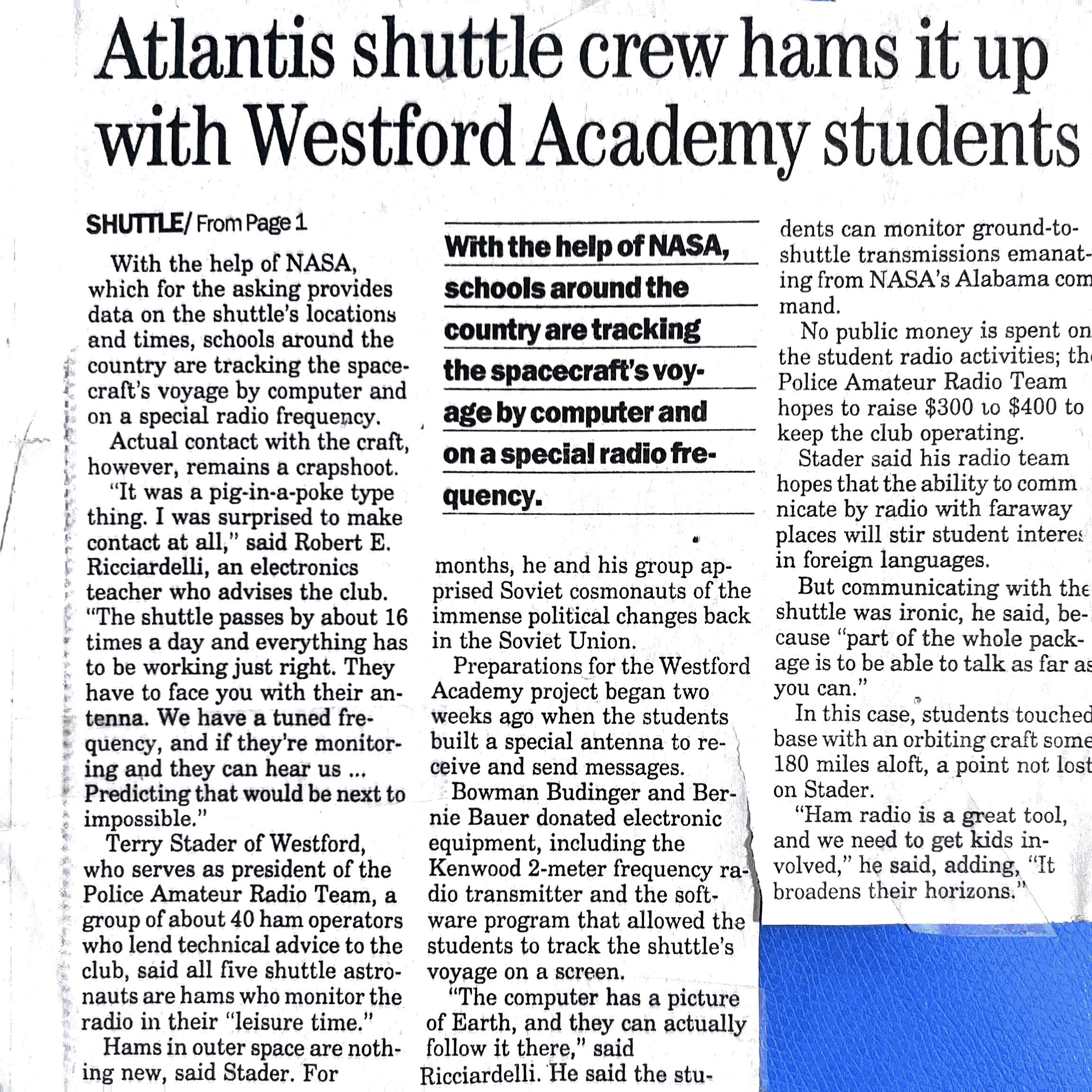
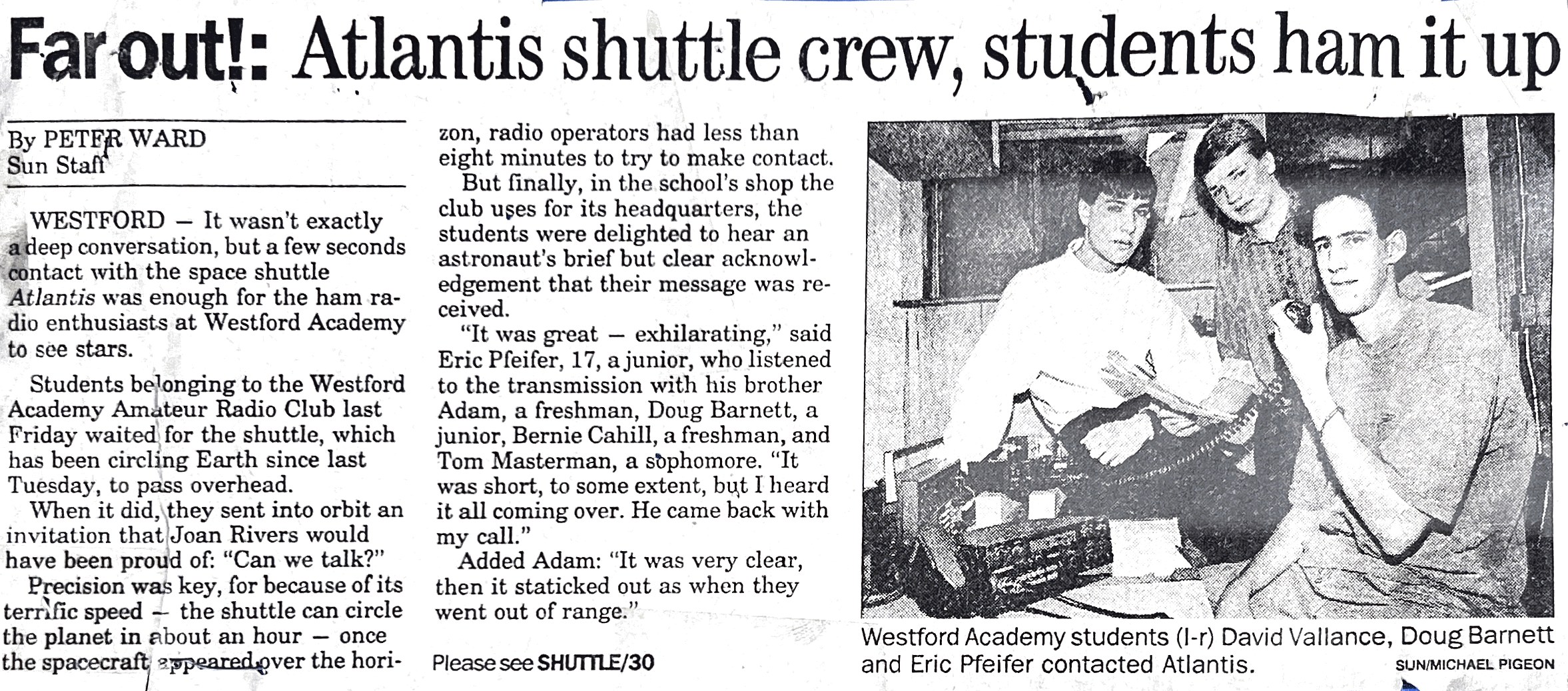
My first experience with making contact with the Space Shuttle Atlantis as a Technician
I recently stumbled upon my QSL Card box, and in it, I found an article clipping my mother had kept when I was in HS.
I was a nerd in school and could always be found in the computer lab or electronics shop. If you read about me, you’d know I got my amateur license in 1991 and became so involved in my hobby that I helped start a Ham Radio Club in my High School to get a teacher pass to play radio! Just kidding!
So back to the article…
The local club PART furnished us with a VHF radio and a vertical antenna mounted on the roof. We were given a radio room just off the shop area when we established the club. Now around that time, NASA had several shuttle missions with ham radio gear and licensed astronauts on the shuttle. They were doing scheduled windows where hams could try to make contact with the Atlantis.
It’s been a long time since that contact, and the details are a bit hazy, but I remember that we had gotten wind that the Atlantis would be overhead in a tiny window during the school day.
I remember I got special approval from my electronics teacher to remain in the radio room during the window as the other two students had made attempts earlier in the week but were unsuccessful in making contact.
But I was determined to make a go at it. I listened through all that static, waiting for an opening and watching the tracking software count the clicks till it came into view.
As it neared the window opening, I listened intently through the noise floor, waiting to hear the club callsign come back (N5WQC) from the shuttle. Then it rang out, we confirmed with a signal report, and it was gone.
We were only 1 of 5 or six stations to make contact with the Atlantis, and that memory will forever be something to cherish and further me on to making more memories with other hams in the future.