
Field Notes from N1JUR
Real-world ham radio tips, portable operating lessons, gear thoughts, and activation stories from the field to the shack.
What You’ll Find Here
This blog is where I go deeper than a YouTube description. You’ll find practical ham radio guides, activation lessons, gear breakdowns, and field notes from real operating experiences.
Some posts are beginner-friendly. Some get a little more technical. And some are just honest lessons from the field — because not every activation goes perfectly, and that’s usually where the good stuff happens.
Portable operating tips
POTA, SOTA, and location-based activation ideas
Gear and antenna experiments
Beginner-friendly ham radio guides
Field stories and lessons learned
Ham Radio Logging Apps? What to choose?
Many new ham radio enthusiasts often ask me which logging apps I use. When I'm asked this question, I pause and ask what they are currently using. Some may be using FT8, while others may be building their POTA setup and trying to improve their logging. Some may even be using paper logging and looking for an upgrade. Regardless of where they are in the process, I try to help them by shedding some light on a few areas that might be useful.
Many new ham radio enthusiasts often ask me which logging apps I use. When I'm asked this question, I pause and ask what they are currently using. Some may be using FT8, while others may be building their POTA setup and trying to improve their logging. Some may even be using paper logging and looking for an upgrade. Regardless of where they are in the process, I try to help them by shedding some light on a few areas that might be useful.
Parks on the Air/ POTA Activations:
As a frequent user of portable activation logging systems, I highly recommend HAMRS (https://hamrs.app/). This excellent logger is lightweight, quick, and multi-platform, and it offers a great mix of export and analytics features. While it may not be suitable as your primary logging app for all your contacts, it provides several templates for Field Day, Parks on the Air, and Generic operations. I use it on both Windows and iOS platforms.
It is important to note that HAMRS is not a "Swiss army" logging solution, but rather a direct logging tool to ADIF format with a few additional functions to enhance the user experience. It does not interface with your radio, so if you require a logging solution for Digital/FT8 operations, you may need to look for another suitable option.
Parks on the Air / POTA Digital Logging:
Earlier, I mentioned that HAMRS is not the best option for digital modes in the field. To optimize my digital experience, I needed a lightweight, customizable, and feature-rich logger with basic CAT control and auto-logging capabilities. This is where the Amateur Contact Log (https://www.n3fjp.com/aclog.html) comes in handy.
I use an FT891 HF radio and a Windows Surface Laptop running WSJTX. To seamlessly control the VFO, make an FT8 contact, and log it, I integrated both my Digirig, CAT control and AC Log. I created a new log for each activation, which I can export and import into the POTA website, and my primary AC Log is in my Ham Shack. I only set up one of the syncing features to QRZ for quick call lookup, but none of my logging is auto-synced. I do this to avoid messing up my main log.
For anyone who is interested, I plan to create a video demonstrating this setup. It has been the best combination of easy-to-integrate software and hardware, making activations a breeze!
Field Day(s)
N1MM Logging is the preferred software for logging during Field Day. Its history of use in this event is extensive, and there are numerous videos available that explain how to set it up and configure it for both standalone and networked use. Networking can be a bit challenging, but it is not impossible. The biggest challenge comes with keeping all versions of the program updated to the same software level, which can feel like a full-time job as Field Day approaches.
If you are considering using N1MM as your home shack logger, it is capable, but its interface and UI may not look as modern as other software options.
Home Shack Use:
Choosing the right logger can be a tough decision. To make it easier, consider three things. First, try out all the available options, such as Ham Radio Deluxe, AC Log, OM Log, Swiss Log, Aether (Mac Only), and Rumlog. But before you do that, take an inventory of your modes. Are you a CW and Digital user, or do you prefer voice? Do you chase awards or want to get into DXing? Each of these loggers will have strengths in different areas. To make the evaluation process easier, determine what is most important to you before you make a purchase.
So Hope these ideas helped you sort out what logger works for you. Whether you are a pen/paper person or love the latest "Wizbang" features, there is going to be a logging app that will fill that need. Both out in the field and in the home shack

Raise our Fees!
In the latest QST Editorial, they discuss considering the increase of ARRL Membership. I dive into it a little and share my opinion on the matter.
In the latest QST Editorial (found here), they discuss considering the increase of ARRL Membership. I dive into it a little and share my opinion on the matter.
The ARRL is a not-for-profit organization with a mission to advance the art, science, and enjoyment of Amateur Radio. The ARRL funds its operations through membership dues, grants, and other contributions. As an ARRL Member, I firmly believe that a proposed Membership increase is needed to keep up with the additions.
Here is a little background for my visitors who don’t know the ARRL.
The ARRL Headquarters building in Connecticut houses the League's administrative staff, as well as its library collection and museum artifacts. The headquarters also houses the League's editorial team for QST magazine; the publishing office for books such as "The ARRL Handbook" (the most widely used reference guide for Amateur Radio); a production facility that produces printed materials such as certificates or awards; an audiovisual department responsible for making videos about Amateur Radio activities; an IT department that maintains web sites; plus many other departments needed to keep everything running smoothly! They are a business that supports the Ham Radio community and supports us when governments try to restrict our antennas and activities locally.
Representing Hams who are hand-tied by HOA Lobbyists
The opposition to amateur radio is strong and growing. The HOA lobby has been gaining strength, with more than 2,000 registered lobbyists in Washington, DC, alone. This means more people are working against us than those supporting our cause.
The power of these lobbyists cannot be underestimated; they can make or break legislation that affects the future of amateur radio across America. Suppose we want to see positive changes happen in our favor. In that case, we need the ARRL to be financially strong to go to bat and advocate.
The Benefits of ARRL's Fees
The ARRL's fees are used to support their many services and programs. These include:
Funding for educational programs, including the National Parks on the Air (NPOTA) program and the Youth in Amateur Radio (Youth Ham Radio) initiative.
Resources for amateur radio operators include a monthly magazine mailed to all members and an online database of radio equipment and antennas.
Support for amateur radio advocacy efforts, such as working with Congress on legislation affecting our hobby or testifying before state legislatures when they consider bills that could impact hams' ability to operate their stations freely. Which is a big one for those who live in HOA-restricted places.
How ARRL Fees Support Amateur Radio
When I hear folks mention how they feel they aren’t getting the “value” for membership in the ARRL. But here are how some of our fees support Amateur Radio in several ways:
ARRL's Initiatives: The League's initiatives include developing and implementing programs and services that benefit all amateurs, such as Amateur Radio Emergency Communications (AREC) training courses; the annual National Conference on Emergency Communications (NEC); Ham Aid kits for disaster response; and more.
ARRL Advocacy: Through its Washington Office, the League advocates on behalf of Amateur Radio before Congress and federal agencies to ensure it remains free from unnecessary regulation or restriction by government entities.
ARRL Commitment: The ARRL has been committed since its founding in 1914 to serving its members through volunteerism, community service, and public information programs designed to promote understanding of Amateur Radio among non-hams who may be interested in learning more about this unique hobby/service opportunity but don't know where or how they can get involved locally with their local club(s).
The Impact of ARRL Fees
The ARRL is a non-profit organization that relies on membership dues and donations to fund its operations. The League has been around for over 100 years and continues to provide valuable services for amateur radio operators across the country.
The benefits of membership are many: Members receive copies of QST magazine every month; they can attend local club meetings or conventions; they have access to online forums where they can ask questions about their equipment or get advice from other hams who've been there before them; members have access to free training courses offered by ARRL Field Organization volunteers. These are only some of the many ways that being an ARRL member helps you get more out of your hobby!
What ARRL Fees Mean for Amateur Radio
The ARRL is the national association for Amateur Radio, and it's the organization that supports amateur radio in the US. The ARRL has many roles, including:
Supporting Amateur Radio by providing training resources and certification programs
Promoting Amateur Radio through public relations campaigns and outreach efforts
Providing legal protection for hams who operate on frequencies reserved for them by law.
The Need for ARRL to Increase Fees
The ARRL is the national amateur radio association responsible for many activities that help make Amateur Radio fun. The organization provides training materials, publishes magazines and books about the hobby, sponsors conferences, and conventions, supports local clubs, and more.
These fees are used to pay for things like:
The magazine QST (Quarterly Communication)
The website ARRL.org
National conventions such as Hamvention® or Dayton Hamvention®
Scholarships for Youth, STEM Support and education (Pioneered by Steve K5ATA), and other projects that fund the advancement of the hobby.
Why am I for the increase?
You may be wondering why the ARRL needs to raise its fees. The answer is simple: it's because of all the benefits of being a member of this organization. As an ARRL member, you get access to a wide range of resources and services that can help you improve your skills as a ham radio operator.
They are our representatives in Congress and our local communities. When they support us, how are we going to help them?
Please let me know what your thoughts are. Do you know if these increases are overdue? Should the ARRL just cut back? Let me know in the comments.

Promote the Hobby
Get out and promote your local ham club and the Amateur Radio Hobby.
My Local Club, Granite State Amateur Radio Association, was invited to a STEM High School Event in our local community. We set up a small display with full HF Gear and a Step-IR Vertical. It was an excellent experience for everyone attending, and it made me want to encourage everyone who is part of a club to get out and promote the Amateur Radio hobby.
Here is a quick excerpt from the article.
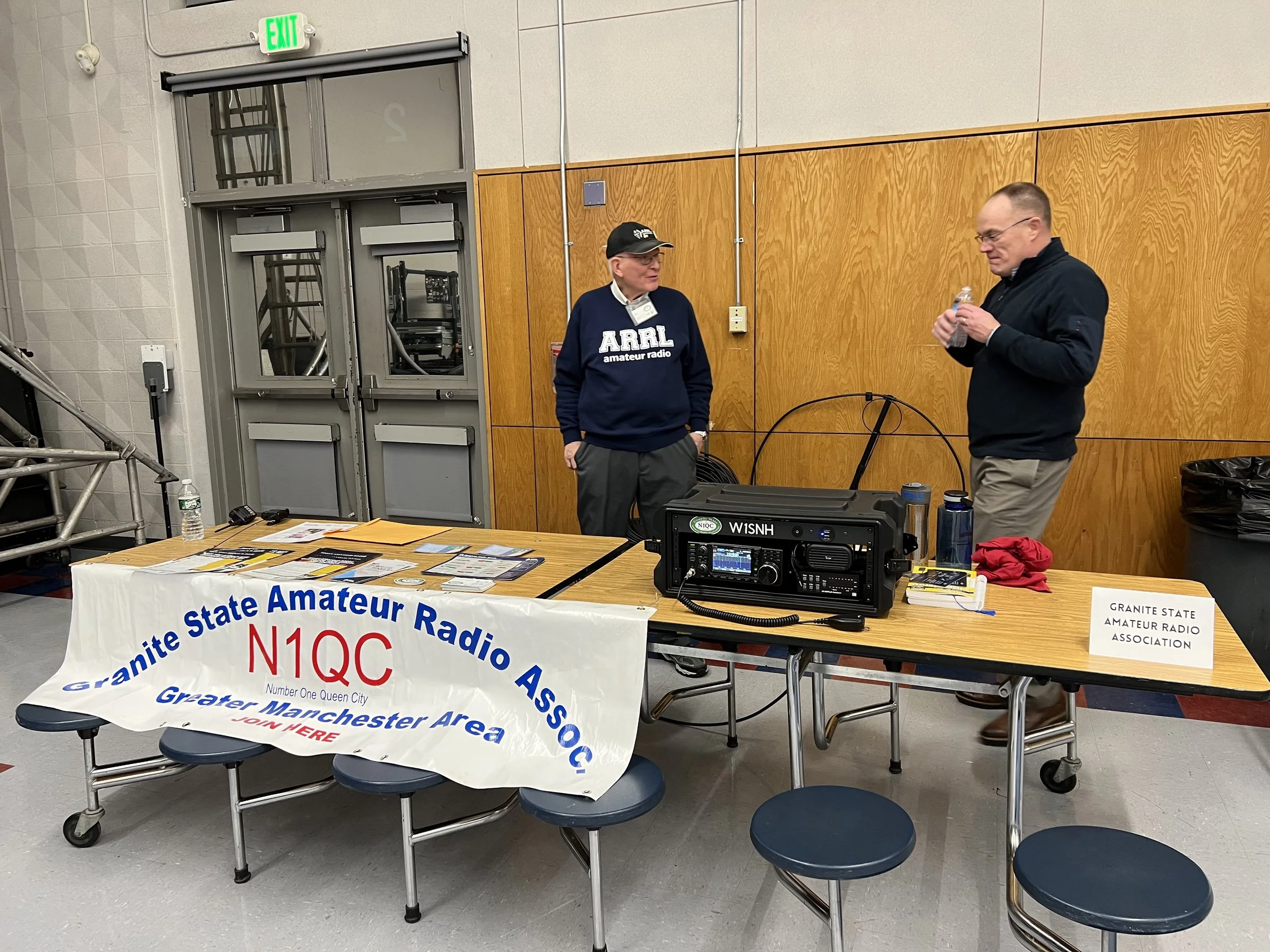
he GSARA table included an operating Icom IC-7300 HF station in a “go box” with an outdoor CrankIR portable vertical antenna and various hand-held VHF radios. Numerous hand-outs were provided by ARRL (Steve Goodgame, K5ATA, Education and Learning Manager), including Why Should You Give Amateur Radio a Try? and What Amateur Radio Can Do for Your School and Students. Students, parents, and teachers learned about our hobby and how it can initiate a passion for exciting, well-paying technical careers. GSARA provided other material.
Go check it out, and if you are involved in your local club, consider getting out in the community and promoting the hobby!

Ham Radio when All else fails…
Ham Radio Saves the day! When all else fails Ham Radio is there. If you want to know more about how to get into this great hobby hit me up!
Chronicle wrote an excellent article and video on how a local ham in the New Hampshire area was rescued from a few other Ham Operators.
It just shows that this hobby has some top-shelf people who care about others to save lives.

My Top 5 Ham Apps for iOS
What Ham Radio Apps are on your smartphone? I take a quick dive into what I use and the features that keep them on my home screen.
BE SURE TO CHECK OUT PART 2 HERE FOR ADDITIONAL RECOMMENDATIONS
I was planning a short talk for my local club on some of my favorite Ham Apps I use on IOS.
I also wanted to share them with my “Ham-ily,” knowing it might help spark a conversation.
If you have a favorite I didn’t touch on, feel free to share it.
Here are my top 5 Ham Apps I use.
HamAlert -This is the portable version of the spotting dx cluster. If you ever want to be notified of callsigns that you need to complete a WAS or DXCC, then this is an app you want to have.
SolarHam - we all want to know the solar/band conditions well; this site is packed with detailed maps and up-to-the-hour stats on rf conditions.
EzyQTH - if you do pota or are always outside playing the radio, you’ll love this app. Many of my logging apps aren’t GPS or grid square aware but fear not; this app will take your GPS coordinates and tell you your Lat/Lon, grid square, and maidenhead without input.
Pota. App - this isn’t so much a universal app but is one you want to make part of your smartphone. I refer to it daily, whether hunting or activating, as it’s a great site to stay abreast of the latest activations.
Radar Scope - this isn’t so much a ham app, but it has been helpful for me to keep tabs on weather conditions and lightning. I hope to automate this someday, but until then, I need to disconnect my antennas when lightning is on the horizon manually.
Those are my five favorites. What ones do you use to take up coveted screen space? Let me know in the comments.
I've also updated my YouTube playlist for those interested in other apps I recommend.