
Field Notes from N1JUR
Real-world ham radio tips, portable operating lessons, gear thoughts, and activation stories from the field to the shack.
What You’ll Find Here
This blog is where I go deeper than a YouTube description. You’ll find practical ham radio guides, activation lessons, gear breakdowns, and field notes from real operating experiences.
Some posts are beginner-friendly. Some get a little more technical. And some are just honest lessons from the field — because not every activation goes perfectly, and that’s usually where the good stuff happens.
Portable operating tips
POTA, SOTA, and location-based activation ideas
Gear and antenna experiments
Beginner-friendly ham radio guides
Field stories and lessons learned
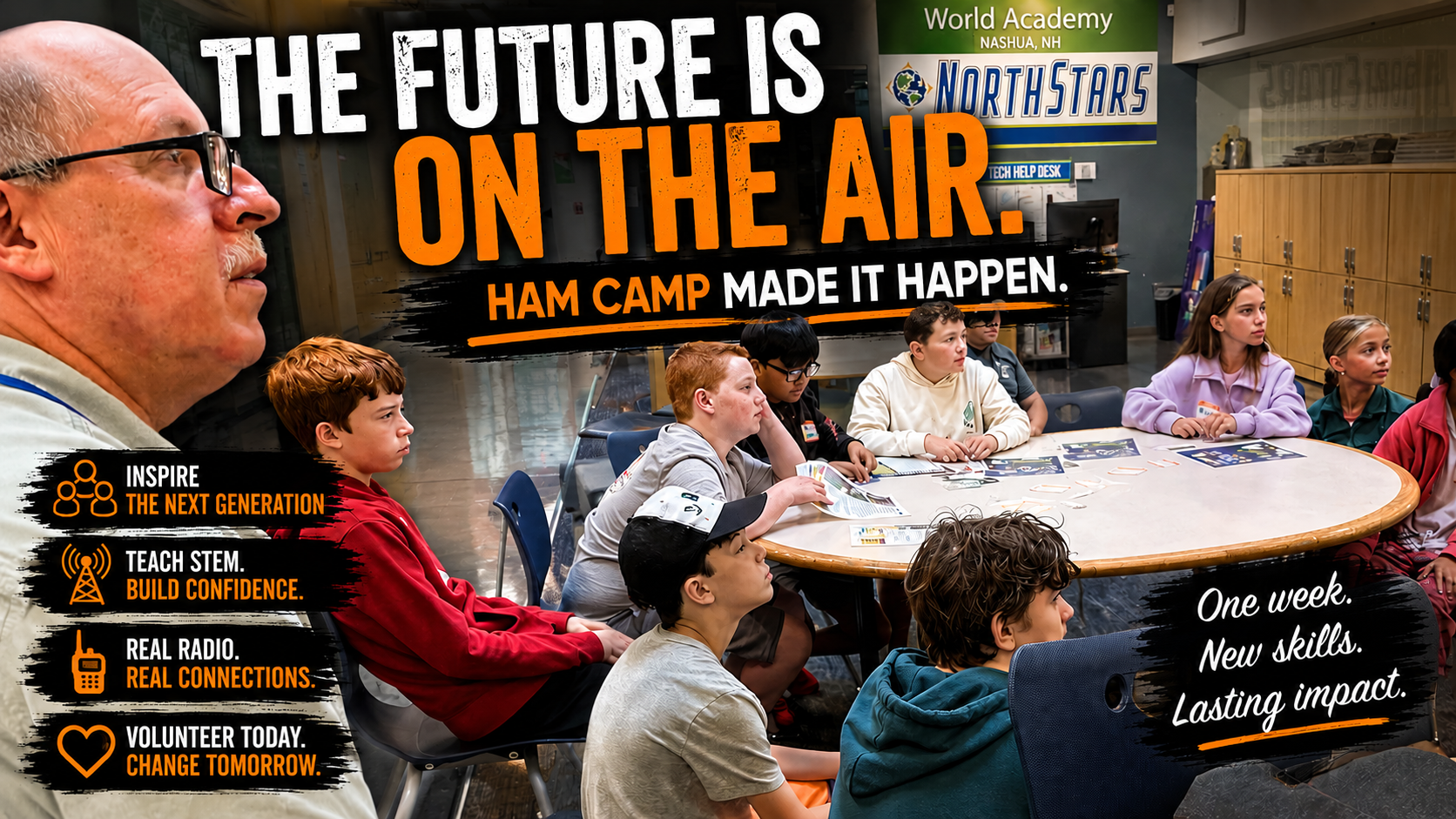
I Volunteered to Give Kids Ham Radio. They Gave Me Back Something Bigger.
I went into Ham Camp hoping to introduce kids to amateur radio. I came out of it more excited about the hobby myself. Sometimes giving back is the best way to remember why we got into ham radio in the first place.
There are moments in this hobby when you remember exactly why you got into it.
Ham Camp was one of those moments for me.
Going into the week, the goal seemed pretty simple: introduce a group of kids to amateur radio. Let them put their hands on radios. Build some antennas. Chase a fox. Get outside. Make some contacts. Hopefully send them home understanding that radio is a whole lot more interesting than staring at a screen and scrolling.
What I didn't expect was how much I would get out of it.
We talk a lot about giving back to amateur radio. We talk about Elmering. We talk about volunteering. We talk about bringing younger people into the hobby.
But after spending a week actually doing it, I think we sometimes have that equation backwards.
Because I went there thinking I was giving something to them.
They gave it back to me tenfold.
Watching Radio Become New Again
I've made hundreds of contacts.
I've activated parks. I've tried different radios, antennas, modes, and probably bought more adapters than any reasonable human being should own.
Eventually, some of this stuff becomes normal.
You turn on a radio and hear someone hundreds or thousands of miles away.
Normal.
You throw an antenna into a tree and suddenly you're talking to somebody you've never met.
Normal.
You key a handheld and someone answers you from miles away through a repeater.
Normal.
Then you put a radio into the hands of a kid who has never done any of those things.
Suddenly it isn't normal anymore.
It's amazing again.
That's one of the things Ham Camp gave back to me.
I got to experience amateur radio through someone else's eyes.
The curiosity.
The questions.
The excitement when something actually worked.
And, maybe even better, the occasional look of complete confusion when it didn't.
Because that's ham radio too.
Want More Portable Radio Content?
Practical portable operating, POTA discussions, gear reviews, Brew & Activate livestreams, and real-world ham radio content.
We Didn't Just Tell Them About Ham Radio
One thing that mattered to me from the beginning was that this couldn't just be a week of adults standing in front of kids explaining what amateur radio is.
They needed to do it.
They got radios in their hands.
They built tape-measure Yagis.
They participated in a fox hunt.
They learned about antennas and signals.
And at the end of the week, we took amateur radio outside for a POTA activation.
That last part was especially important to me.
I wanted them to see that ham radio isn't something that has to live in somebody's basement surrounded by equipment.
Grab a radio.
Grab an antenna.
Go outside.
Put something together.
See if it works.
Talk to somebody.
That's a version of amateur radio I think a lot of kids can understand.
But somewhere during all of that, I realized something else.
This wasn't really about radios.
The Radio Was Just the Tool
What were we really teaching?
Problem solving.
Experimentation.
Communication.
Teamwork.
Confidence.
STEM.
How to try something, have it fail, change something, and try again.
Those lessons are much bigger than amateur radio.
And that's where I think our hobby has an enormous opportunity.
We don't necessarily need to convince a 10-year-old that they should become a lifelong amateur radio operator.
Maybe they will.
Maybe they won't.
That's okay.
If a kid walks away thinking antennas are interesting, that's a win.
If another becomes interested in electronics, that's a win.
If someone discovers radio communication, satellites, emergency communications, engineering, computers, or electronics because of something they experienced with us, that's a win too.
And if one of them eventually earns a callsign?
That's pretty awesome.
But we planted something regardless.
Like What’s Happening Here?
N1JUR is built around helping more people get active in ham radio through videos, Field Notes, POTA content, live streams, gear reviews, and community.
If you already watch the channel and want to support more of the work behind it, memberships are one way to help keep the signal going.
Videos. Field Notes. Live Streams. Community.
Membership support helps keep the N1JUR ecosystem moving without turning every page into a pledge drive wearing a callsign hat.
Learn About the Community →Volunteering Changed My Side of the Hobby Too
This is the part I wasn't expecting.
Ham Camp made me more excited about amateur radio.
That's worth talking about because I think many of us eventually fall into routines with our hobbies.
We chase another contact.
Another park.
Another piece of gear.
Another award.
Another radio.
There's nothing wrong with any of that. I enjoy those things too.
But volunteering scratched a completely different itch.
Instead of asking:
"What can I get out of amateur radio today?"
I spent a week asking:
“What can I give someone else through amateur radio today?"
That small change made a surprisingly big difference.
The reward wasn't another contact in the log.
It wasn't an award.
It wasn't a new radio sitting on the desk.
It was watching someone else discover something.
And when you see that happen because you gave a few hours of your time, shared something you knew, loaned some equipment, helped build an antenna, or simply answered a question...
That's a pretty powerful return on investment.
Your Club Can Do This Too
Here's the other thing I came away believing:
You don't need to create an entire Ham Camp to make a difference.
That's probably the biggest misconception I'd like to eliminate.
Maybe your club can't put together five days of programming.
Fine.
Do one afternoon.
Set up a fox hunt.
Bring some handheld radios to a community event.
Build simple antennas.
Partner with a school.
Talk to a Scout group, 4-H organization, library, makerspace, STEM program, or youth organization.
Set up a portable station and let kids see what happens when a signal leaves that antenna.
Most importantly, let them touch things.
Let them turn knobs.
Let them ask questions.
Let them make mistakes.
Let them experience radio instead of simply hearing us talk about it.
You don't need twenty volunteers and thousands of dollars.
You need a few people willing to share what they already know.
Stop Waiting for "Someone" to Grow the Hobby
We hear this phrase constantly:
"We need to get more young people into amateur radio."
I agree.
But who exactly is we?
It's easy to imagine that the ARRL, schools, clubs, YouTubers, manufacturers, or somebody else is going to solve that problem.
There isn't a mysterious group of people coming to do it for us.
We're the people.
Every club has someone who knows antennas.
Someone knows digital modes.
Someone loves contesting.
Someone loves POTA.
Someone can teach electronics.
Someone can organize.
Someone has equipment sitting on a shelf that could become a kid's first experience with radio.
Put those people together and suddenly you have something pretty special.
And the funny part is that while you're supposedly doing all of this for the next generation, you may discover that it puts some energy back into your own enjoyment of the hobby.
That's exactly what happened to me.
I Thought I Was Giving Them a Week
I went into Ham Camp hoping we could give these kids a memorable introduction to amateur radio.
I came out of it remembering something myself.
Ham radio is at its best when it connects people.
Sometimes that's somebody 1,500 miles away answering your CQ.
Sometimes it's another operator helping you figure out why your antenna isn't working.
And sometimes it's standing next to a kid holding a radio for the first time and watching the exact moment they realize:
"Wait... I can actually talk to somebody with this?"
That's the good stuff.
That's the part of amateur radio we need to protect.
And that's the part we need to share.
I volunteered because I wanted to give something back to the hobby.
Instead, the hobby gave something back to me.
Probably tenfold.
And I'd do it again in a heartbeat.
Keep the Conversation Going
What’s one thing you stopped bringing to activations because you realized you never actually needed it? Drop into the Discord and tell the Brew Crew.
Join the N1JUR DiscordWant to Bring Something Like This to Your Club or Community?
I've put together resources, ideas, and lessons from our experience to make it easier for other amateur radio clubs and organizations to do something similar.
You don't have to recreate our entire Ham Camp. Take an idea, adapt it to your club, and start small.
Kids on the Air — Tips & Resources for Clubs and Communities
If one more club puts radios into the hands of ten kids because of what we learned, that's another ten opportunities to show someone what this hobby can be.
And that's how we grow amateur radio.