
Field Notes from N1JUR
Real-world ham radio tips, portable operating lessons, gear thoughts, and activation stories from the field to the shack.
What You’ll Find Here
This blog is where I go deeper than a YouTube description. You’ll find practical ham radio guides, activation lessons, gear breakdowns, and field notes from real operating experiences.
Some posts are beginner-friendly. Some get a little more technical. And some are just honest lessons from the field — because not every activation goes perfectly, and that’s usually where the good stuff happens.
Portable operating tips
POTA, SOTA, and location-based activation ideas
Gear and antenna experiments
Beginner-friendly ham radio guides
Field stories and lessons learned

QSL Cards? Are they relevant in the hobby?
Are QSL cards still relevant in the hobby? I still think so, its a great medium and one that brings joy.
I recently received an email from another ham introducing himself, and in the conversation thread, he posed the question,
“Do I have my own QSL Card?”
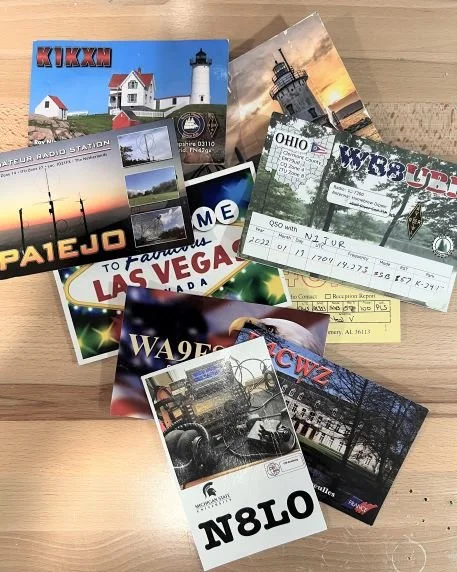
After replying with an initial No, It got me thinking.
QSL cards have been a tradition in the ham radio community for many years. They confirm communication between two operators and are often exchanged to commemorate the contact. While some may argue that QSL cards are outdated in the age of digital communication, they remain an essential part of the ham radio hobby for many operators.
QSL cards are still relevant because they offer a tangible way to remember a contact. Many hams enjoy collecting QSL cards to document their communication history and display their achievements. Additionally, QSL cards can be a way to connect with other hams around the world and learn about different cultures.

Another reason QSL cards are still used is that they can be used as proof of communication for awards and contests. Many contests require QSL cards as proof of contact, and some awards can only be earned by exchanging QSL cards with a certain number of countries or regions.
Overall, while digital communication has undoubtedly changed how hams communicate, QSL cards remain an essential part of the hobby for many operators. They offer a tangible way to remember and commemorate contacts and can be used as proof of communication for awards and contests.
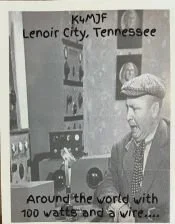
What do you think?
Post in the comments, and let me know!

5 Ham Podcasts you need to listen to
If you love to listen to podcasts then you don’t want to miss my top 5 podcasts that I listen to in my playlists.
If you’re like me, you search high and low to find good Ham Radio and Portable Operations content. When in the sea of YouTube Channels, the shows that export a podcast can sometimes make you feel like an outsider, as their shows cater to a live audience, so when you listen, it’s like you missed the “inside” joke from the last night’s party.
Don’t get me wrong, those shows have a special place in my playlists, but it’s usually on long drives where I need some “background music” or want a quick laugh.
The point of this post is that I’m always on the “hunt” for a good podcast on everything related to ham radio. When I was thinking about what I was going to blog about this week, I thought there must be other folks that could benefit from my playlist.
So without any more delay, here are my top 5 Ham Podcasts in my playlist.
Like What’s Happening Here?
N1JUR is built around helping more people get active in ham radio through videos, Field Notes, POTA content, live streams, gear reviews, and community.
If you already watch the channel and want to support more of the work behind it, memberships are one way to help keep the signal going.
Videos. Field Notes. Live Streams. Community.
Membership support helps keep the N1JUR ecosystem moving without turning every page into a pledge drive wearing a callsign hat.
Learn About the Community →
One of my favorite podcasts so far. I am not an electronics nerd but after listening to this show it always inspires me to want to open my wallet.

I am always inspired when I listen to Eric Guth 4Z1UG as host. His guests are always interesting, even when our backgrounds are twenty years apart. This show is a great story telling format and I am never disappointed with his guests.
The HRCC Podcast is a great well, polished show. Although it can sometimes be long - which doesn’t bother me, listening to the husband and wife team talk about ham radio, family, and general life is always a win in my book. Check them out.
Make it stand out
I am an avid Portable Ops and POTA Guy. Nj7V Charlie of Red Summit RF Channel does a great job of always keeping his bi-weekly content fresh and interesting. This is a great “grass roots” podcast you should have in your playlist
The Ham Radio Clubhouse is the “Red herring” to the other four pods I recommend. I akin it to my youth when all my uncles would gather outside in the gazebo on a hot summer night, light up a cigar, drink beers, and make fun of each other—sharing about the good ole days. The plus is that you’ll also sometimes get ham radio content too!
Keep the Conversation Going
What’s one thing you stopped bringing to activations because you realized you never actually needed it? Drop into the Discord and tell the Brew Crew.
Join the N1JUR Discord
Making Memories
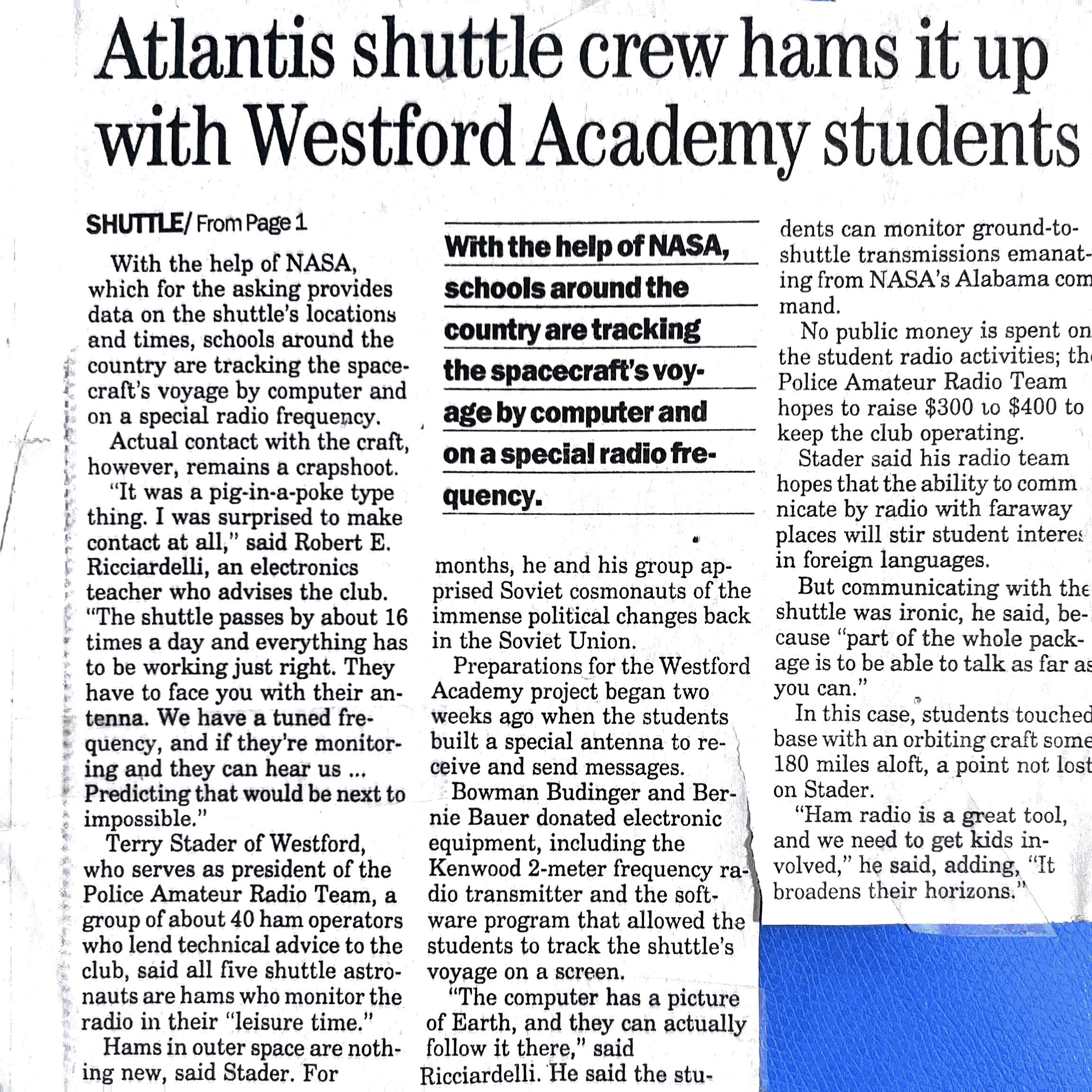
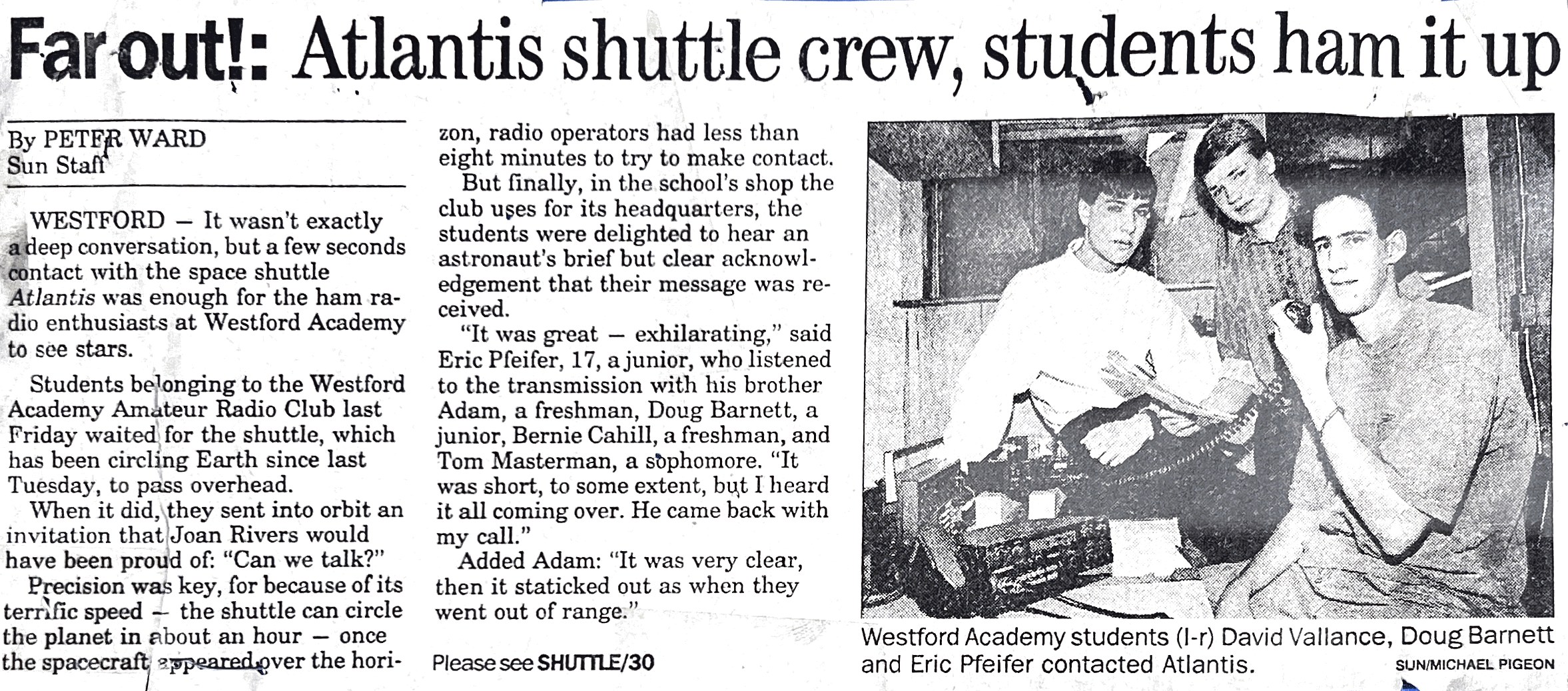
My first experience with making contact with the Space Shuttle Atlantis as a Technician
I recently stumbled upon my QSL Card box, and in it, I found an article clipping my mother had kept when I was in HS.
I was a nerd in school and could always be found in the computer lab or electronics shop. If you read about me, you’d know I got my amateur license in 1991 and became so involved in my hobby that I helped start a Ham Radio Club in my High School to get a teacher pass to play radio! Just kidding!
So back to the article…
The local club PART furnished us with a VHF radio and a vertical antenna mounted on the roof. We were given a radio room just off the shop area when we established the club. Now around that time, NASA had several shuttle missions with ham radio gear and licensed astronauts on the shuttle. They were doing scheduled windows where hams could try to make contact with the Atlantis.
It’s been a long time since that contact, and the details are a bit hazy, but I remember that we had gotten wind that the Atlantis would be overhead in a tiny window during the school day.
I remember I got special approval from my electronics teacher to remain in the radio room during the window as the other two students had made attempts earlier in the week but were unsuccessful in making contact.
But I was determined to make a go at it. I listened through all that static, waiting for an opening and watching the tracking software count the clicks till it came into view.
As it neared the window opening, I listened intently through the noise floor, waiting to hear the club callsign come back (N5WQC) from the shuttle. Then it rang out, we confirmed with a signal report, and it was gone.
We were only 1 of 5 or six stations to make contact with the Atlantis, and that memory will forever be something to cherish and further me on to making more memories with other hams in the future.


Promote the Hobby
Get out and promote your local ham club and the Amateur Radio Hobby.
My Local Club, Granite State Amateur Radio Association, was invited to a STEM High School Event in our local community. We set up a small display with full HF Gear and a Step-IR Vertical. It was an excellent experience for everyone attending, and it made me want to encourage everyone who is part of a club to get out and promote the Amateur Radio hobby.
Here is a quick excerpt from the article.
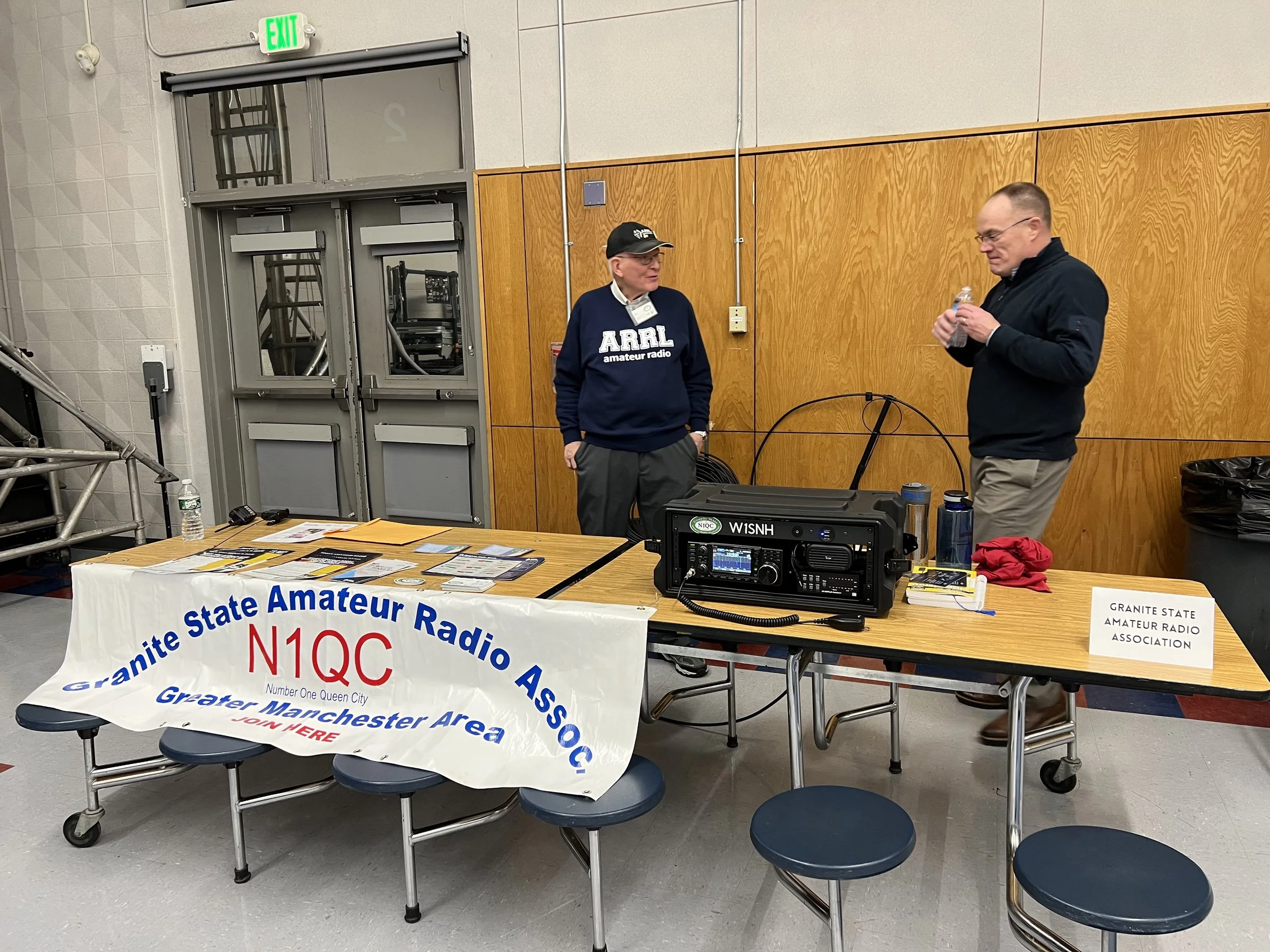
he GSARA table included an operating Icom IC-7300 HF station in a “go box” with an outdoor CrankIR portable vertical antenna and various hand-held VHF radios. Numerous hand-outs were provided by ARRL (Steve Goodgame, K5ATA, Education and Learning Manager), including Why Should You Give Amateur Radio a Try? and What Amateur Radio Can Do for Your School and Students. Students, parents, and teachers learned about our hobby and how it can initiate a passion for exciting, well-paying technical careers. GSARA provided other material.
Go check it out, and if you are involved in your local club, consider getting out in the community and promoting the hobby!
Keep the Conversation Going
What’s one thing you stopped bringing to activations because you realized you never actually needed it? Drop into the Discord and tell the Brew Crew.
Join the N1JUR Discord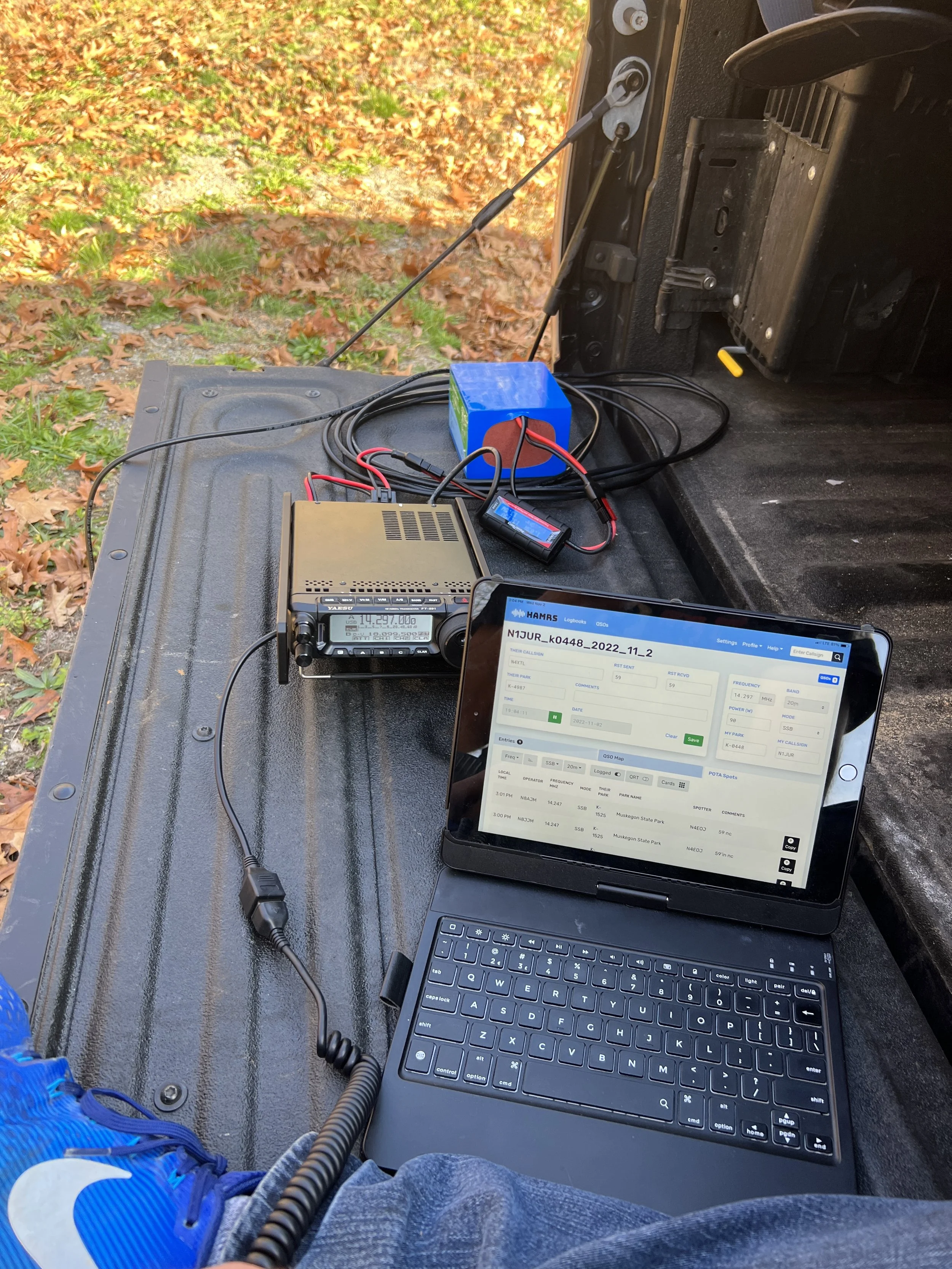
My POTA Kit
I am creating a blog series on My POTA Kit. This is my main activation setup and all the ins and outs of my setup.
So I’ve been doing POTA for over two years now with over 5000 contacts and over 156 parks activated under my belt. I have been able to work out my “go bag,” so I can easily setup in under 5 minutes - including the antenna.
So now that I have this blog to chronicle my radio adventures, I decided I might be able to share some of my experience and get you out and activate a park.
Now let me frame this topic a bit…
The goal of my setup is to get an activation setup within 5 minutes or less. I drive a lot for work, so the opportunity to activate a park between client visits sometimes is live a RADAR for me.
A setup that quickly maintains the line of efficiency makes things very easy to get up and running.
This is the difference between a successful activation and a failed attempt, as the airwaves can be challenging no matter how good your setup is.
I am fortunate to get the opportunity to activate new parks. This, for me, requires some quick scoping out and locating a spot.
Keep the Conversation Going
What’s one thing you stopped bringing to activations because you realized you never actually needed it? Drop into the Discord and tell the Brew Crew.
Join the N1JUR DiscordMy Setup
So with my setup, I have the non-negotiables.
Black mesh zipper bags - This stores all cables, flexible ties, connectors, antennas, interfacing coax, and radios. These are the ones ladies use for makeup items. You can find them on Amazon.
Radio Bag- I have an Oakley Mail Currier bag - which is no longer made) that houses my radio, logging tablet, battery, power cords, and watt meter. The fold-over zipper case has additional zippered storage where my zipper pouches are all organized. I also have a Rig Expert Stick 230 and Powerwerks in-line watt meter to round out the bag.
I carry a pen and yellow stick-its, a 2-way mike splitter - for dual activations, a Digi Rig, and charging cables for the smartphone.
Everything in the bag is power poles and provides easy use when I need to cable power together.
The Logging Computer - I have two devices. I use an iPad with a Bluetooth keyboard for regular logging - an on/off switch is a must! If you can afford it, I would get the iPad with cell, as it makes it easy to do callsign lookups and synch the log.
I am in the process of building a computer for digital modes. But for this post, I saved that for another post as a video would help explain the process.
I use HAMRS for logging and Dropbox to sync my logs. My process is simple: setting up the log file in HAMRs and exporting the ADI file to Dropbox. When I get home, I open up the log file with ADIF Master, confirm all fields, park, and other items are in check, and then upload the file to the POTA.APP website for processing. Then, to give proper credit to the hunters, I created a profile on Ham Radio Deluxe for the park, ensuring the Grid Square is correct for the location profile of the park and imported the log file. HRD then does the heavy lifting for QRZ and LOTW.
Want More Portable Radio Content?
Practical portable operating, POTA discussions, gear reviews, Brew & Activate livestreams, and real-world ham radio content.
Antennas
I can go into greater detail on these antennas - and will at a later date, but I’ll list them here to explain my kit. I do have many so let me explain
Spring/Summer/Fall Activations -
I use a combination of two antennas. My first go-to antenna is the Wolf River Coil TIA 1000, with the center-loaded section. I use the 24” base and have the dual collar option.
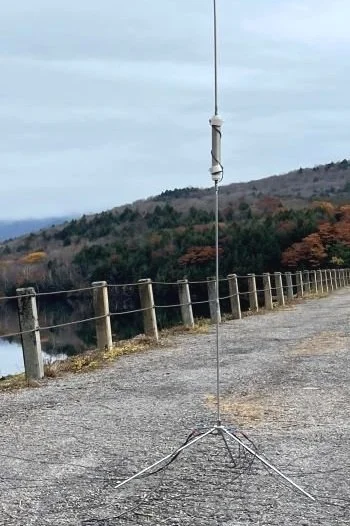
I use a combination of two antennas. My first go-to antenna is the Wolf River Coil TIA 1000, with the center-loaded section. I use the 24” base and have the dual collar option.
I also have a Buddiepole Pro, and this antenna doesn’t get a lot of use as sometimes the counterpoise can be finicky and need more attention to get set up. I do have to give this antenna more field time in the spring.
Winter/Cold Activations -
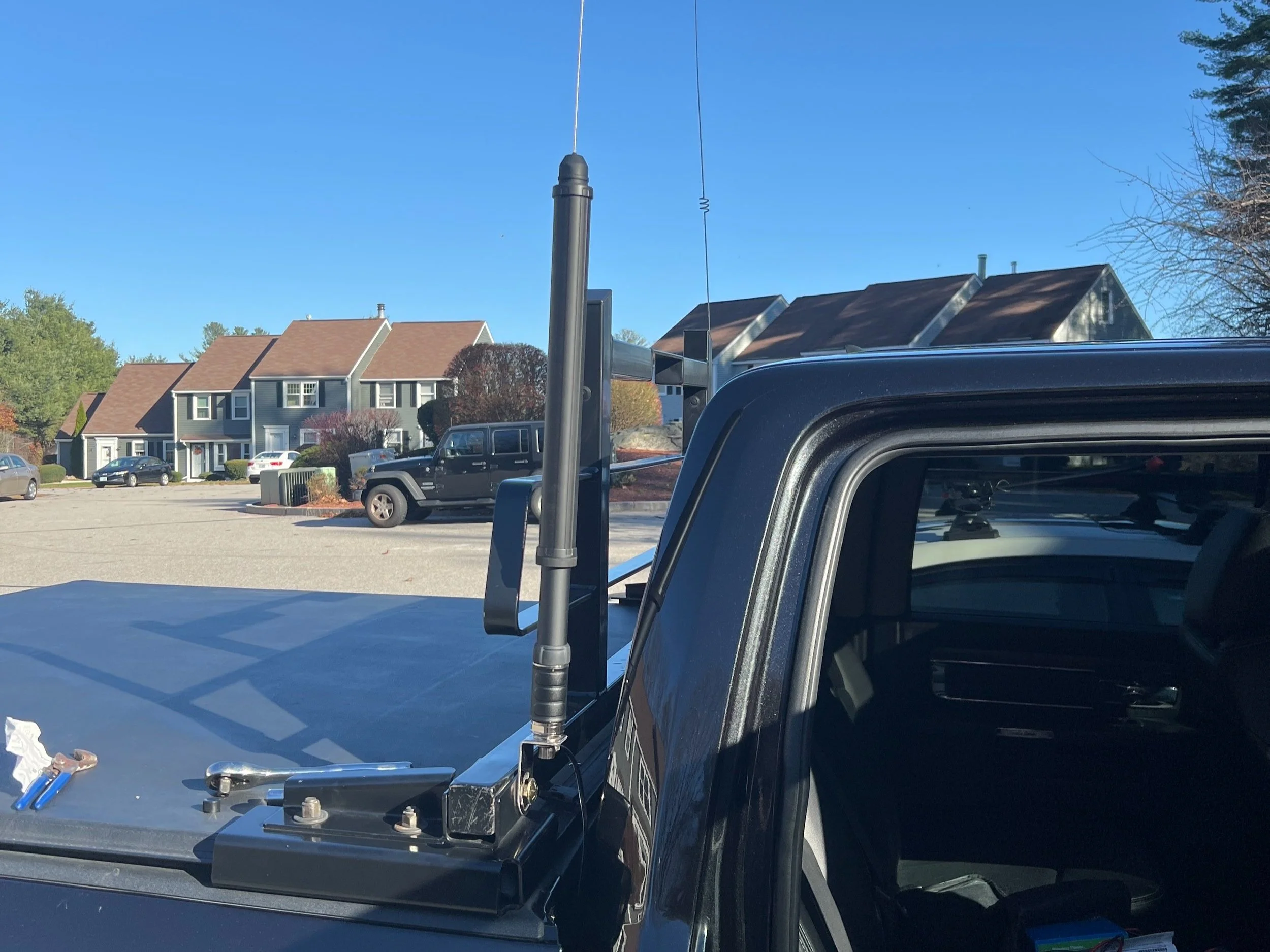
I do most, if not 90%, of my activations in the winter from my truck. I purchased in the spring of 2022 a Yaesu ATAS 120a and mounted this to my back rack.
I run a few wire antennas, with the Chameleon EFLFS 80-10 Lightweight Sloper being the one I use mostly. I plan to do some additional reviews on these at a later date. But I have used this once at a POTA Meetup with success and on several Field Day events.
Batteries
I haven’t tried the gamut of batteries out on the market, but my stable includes a 15-ah and 20-ah Bioenno battery. Both of these are charged using the Bioenno charging plugs, and I have never run out of power. I have a solar charge controller from Buddipole (Powermini 2) and a 60-watt panel. Still, I haven’t taken the time to assemble this kit with a 60-watt solar panel, but it will be forthcoming.
I know I can go further into the rabbit hole, but this is an excellent place to ask… What do you want to know about my setup?
I plan on posting more videos on YouTube and social media, and you can always come back to my site for the latest updates.
My question to my visitors is, what you’d like to know more about? My antennas? Setup? The tech? Let me know in the comments.
Like What’s Happening Here?
N1JUR is built around helping more people get active in ham radio through videos, Field Notes, POTA content, live streams, gear reviews, and community.
If you already watch the channel and want to support more of the work behind it, memberships are one way to help keep the signal going.
Videos. Field Notes. Live Streams. Community.
Membership support helps keep the N1JUR ecosystem moving without turning every page into a pledge drive wearing a callsign hat.
Learn About the Community →